
Compare materials · 7 min read
Stock, semi-custom or custom cabinets: each level in a Naples kitchen
Understand cabinet sizes, door and finish choices, and the point at which a Naples kitchen needs full custom work.

Reviewed by Cedric Eckenrode, ownerUpdated November 2026
The short answer
Stock, semi-custom or custom cabinets: which should I choose?
Choose stock cabinets when standard sizes fit, semi-custom when approved changes meet your layout, finish and storage, and custom only beyond that. ProFloors & Cabinets in North Naples sells four semi-custom lines, Fabuwood, UltraCraft, Omega and Mantra, all on plywood boxes; most kitchens arrive 10–12 weeks after the order is accepted.
Choose the flexibility your kitchen needs.
Stock cabinetry offers a premanufactured selection of sizes, doors and finishes. It works when those units create the layout you need. Ready-to-assemble describes how a cabinet is supplied for assembly, while stock describes the product program. Check both details when reviewing a proposal so you know what will arrive at the site.
Semi-custom cabinets come from a manufacturer’s program with permitted changes to case sizes, doors or finishes. Full custom allows a cabinetmaker to develop the work around an individual specification. The National Kitchen & Bath Association distinguishes these categories; use them to define the flexibility your room needs before choosing a line.
Stock
Semi-custom
Dimensions
Stock: Choose from fixed catalog sizes, with fillers and clearances planned around them.
Semi-custom: Choose catalog units with approved modifications in the available increments.
Doors and finishes
Stock: Select from a defined set of door and finish combinations.
Semi-custom: Select from the chosen line, including its additional choices and modifications.
Room fit
Stock: Works when standard units meet the room’s functional and visual requirements.
Semi-custom: Useful when approved adjustments solve layout needs beyond the stock selection.
Availability
Stock: Check inventory for the complete order and obtain a delivery schedule.
Semi-custom: Use design approval, order acceptance and the manufacturer schedule to plan timing.
Fit the cabinets to the layout.
Stock size charts offer set widths rather than every possible dimension. Use the actual catalog to plan usable storage and the spaces between units. A narrow leftover space may need a filler instead of another cabinet. Review that space on the layout before deciding whether stock meets the room’s needs.
For semi-custom, identify which widths, heights and depths can change, in what increments and within which limits. A reduced depth on one cabinet does not imply that every dimension or interior accessory can change. Modifications are at the manufacturer’s discretion. Put the accepted dimensions and changes on the approved drawings.
Fillers and scribe details help cabinetry meet actual walls and give doors, drawers and projecting handles room to operate. Include them in the whole elevation rather than trying to remove every filler. Check existing walls, finished floor height and appliance clearances with your designer or installer before the layout is approved.
Choose the look and storage together.
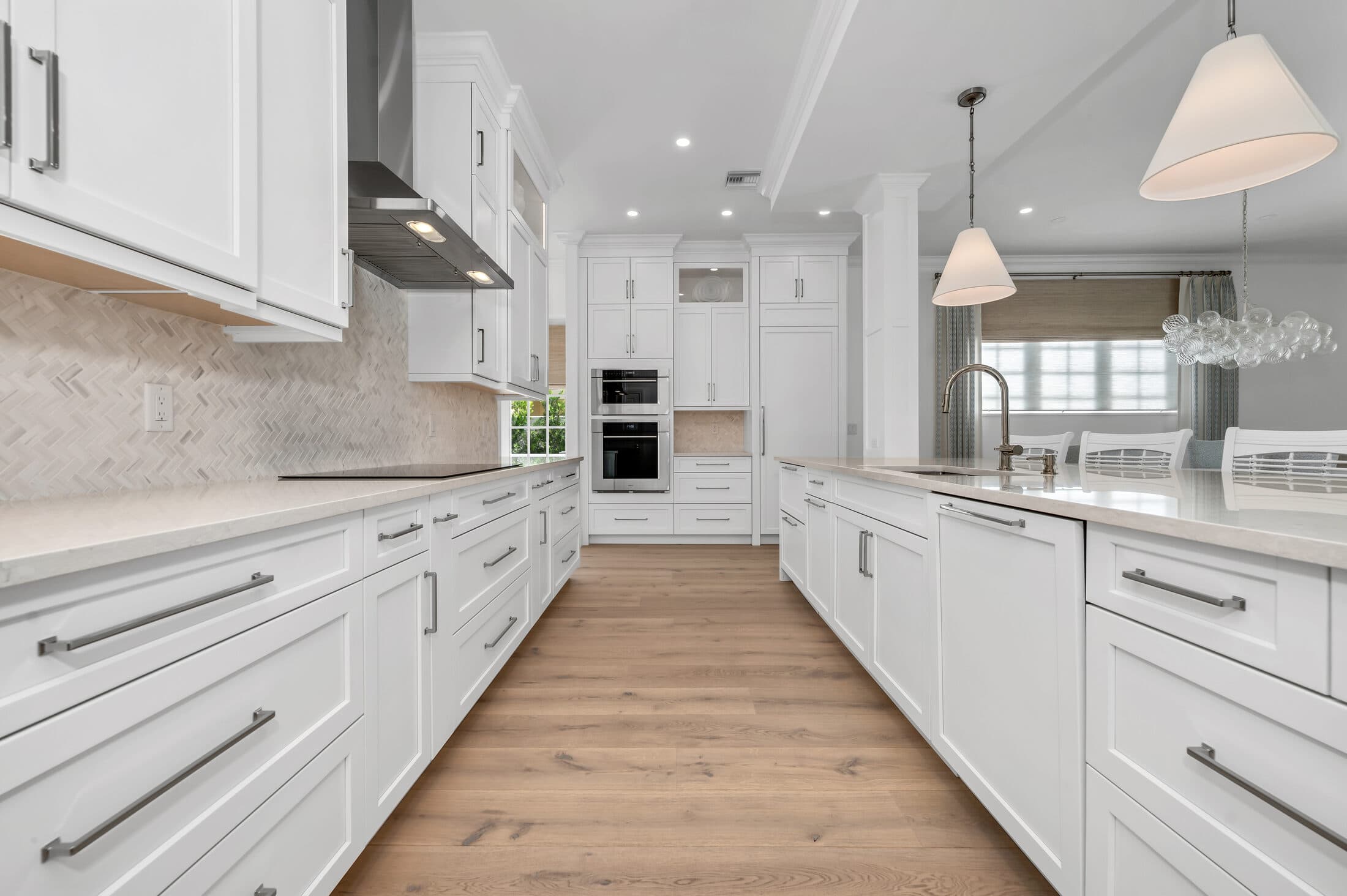
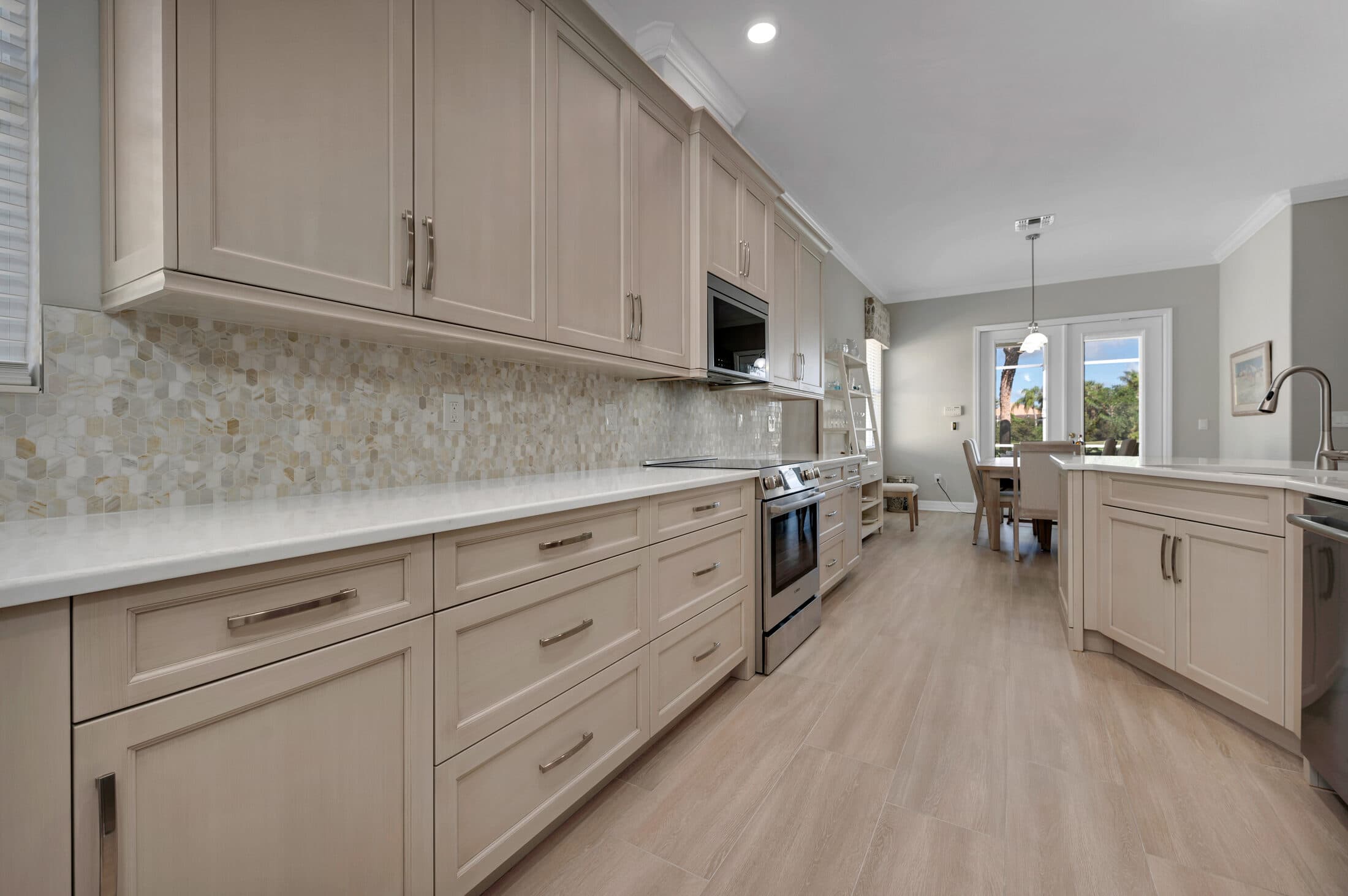
Choose the door style, material, finish and how the door sits on the cabinet box together. A painted Shaker appearance can come from stock, semi-custom or full custom work. Use physical samples to judge the look, then the line’s specifications to establish which sizes and details are available for your layout.
Check finish availability for the exact door and material you like. Place a physical sample beside the floor and counter selections, then work through the storage. Trash pull-outs, drawers and appliance spaces need to fit the cabinet’s usable interior and operate comfortably. Resolve those needs alongside the appearance choices.
“We also used them for kitchen cabinet upgrades and were very happy.”
Use full custom for a defined requirement.
Semi-custom
Full custom
Design boundary
Semi-custom: Use the selected manufacturer’s accepted options and modifications.
Full custom: Develop a specification with the cabinetmaker around the individual project.
A useful reason to choose it
Semi-custom: The available dimensions, finish and storage already satisfy the room.
Full custom: An essential shape, detail, material or finish falls outside those available options.
What still needs approval
Semi-custom: Measured layout, modifications, finish, hardware and installation scope.
Full custom: Detailed fabrication drawings, samples, construction and installation scope.
Consider full custom for an unusual built-in shape, architectural detail or finish that a catalog cannot supply. Write down the essential requirement, then have a designer or cabinetmaker assess that scope.
Judge quality by the actual specification.
Judge construction, hardware, finish and installation separately from design flexibility. The Kitchen Cabinet Manufacturers Association (KCMA) A161.1 performance and construction standard covers factory-assembled kitchen and vanity cabinets, including structural, door, drawer and finish tests. Its scope concerns how cabinets perform; it does not prescribe a particular appearance or material. Use it as a reference when reviewing documentation.
Request documentation for the exact cabinet line; a stock, semi-custom or custom label does not establish test performance or certification. Review the manufacturer’s written care and installation instructions. For a Naples kitchen or bath, include indoor conditions, ventilation and cleaning around sinks and appliances in that review before approving the selection.
Give the ordering schedule a start and finish.
Cabinet ordering and installation have separate milestones. Ask your project manager and the selected manufacturer to confirm the current schedule for your order. Review approvals, site readiness, access and delivery arrangements before agreeing the installation scope.
Design and approval
Review plans, elevations, appliance specifications and finishes before approving the drawings and order.
Manufacture and delivery
Confirm the manufacturer’s acceptance of the approved order, current availability and delivery arrangements for the property.
Installation milestone
Agree the site, access, receiving inspection and installation scope before scheduling work. Confirm completion and punch-list responsibilities in writing.
For stock or full custom, get an order-specific schedule from the supplier handling that work. If you are returning to Naples for the season, share your desired date early and confirm the dependencies before arranging a move or booking other trades.
Bring your kitchen plans to the showroom.
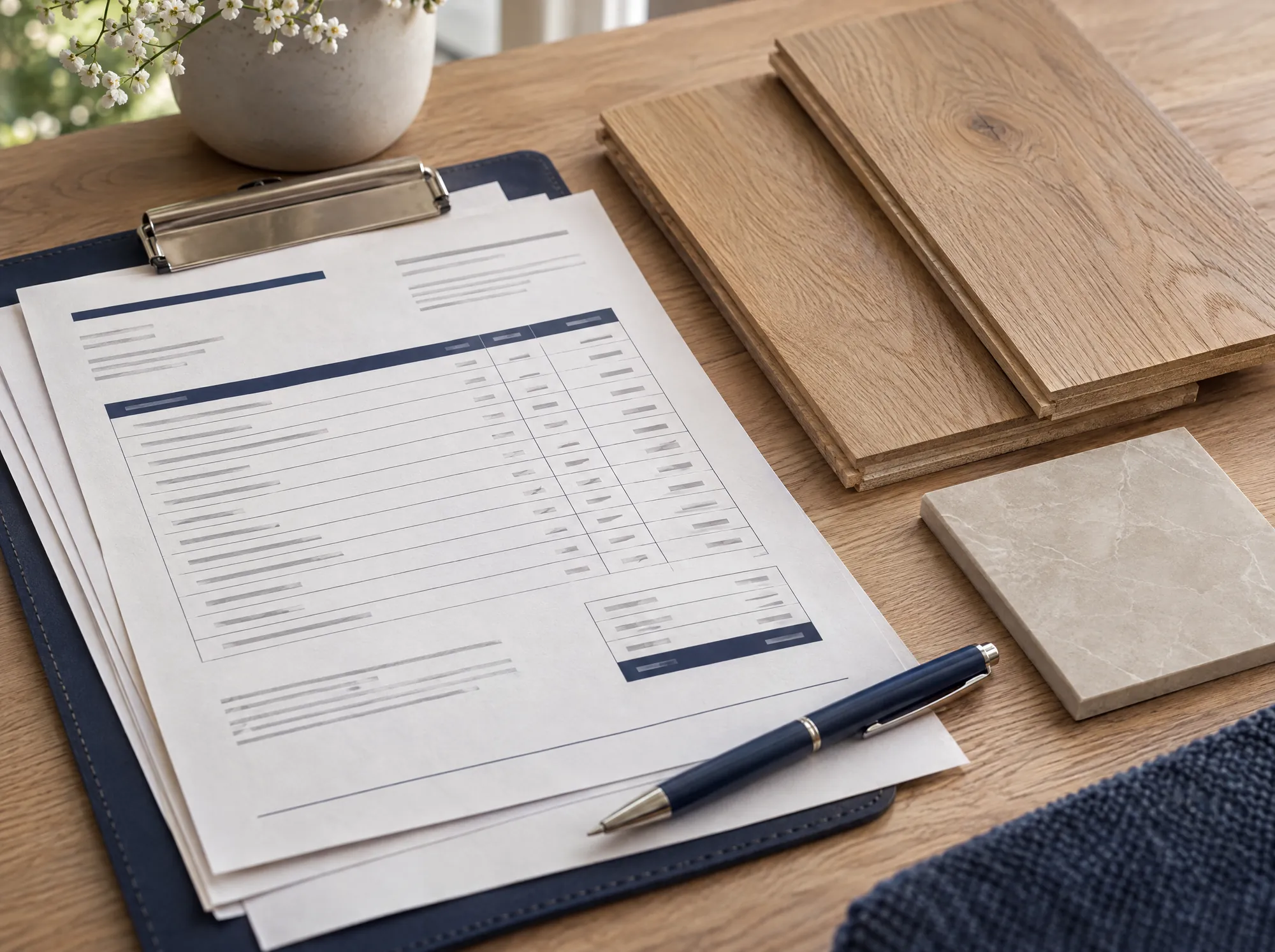
Bring a dimensioned plan if available, photos, appliance model specifications and samples of finishes you will keep. List the storage problems you want solved and any essential dimension or finish. For a condo, include the association’s current renovation and delivery rules; those requirements govern the work and belong in the planning discussion.
ProFloors offers semi-custom kitchen and bath cabinet lines, with one project manager from selection through installation. Review the cabinet options and request a showroom visit with your plans and finish samples. Use the visit to establish which requirements the selected line can meet before you approve an order.
If flooring is changing too, bring its specification into the discussion. Our flooring and cabinet sequencing guide covers installation order, appliance clearance and finished heights. Resolve that sequence with your designer or installer alongside the cabinet drawings, before the units arrive.
Sources (2)
- NKBA: Illustrating Cabinetry and Casework
Defines cabinet categories and explains manufacturer-controlled size modifications, cabinet schedules and fitting details.
- KCMA A161.1-2022: Performance and Construction Standard
Defines the performance standard’s scope and its structural, door, drawer and finish tests without establishing certification for any particular line.
Questions, answered.
Reviewed by Cedric Eckenrode, owner · Updated November 2026
The showroom
- 2033 Trade Center WayNorth Naples, FL 34109
- Mon–Fri 8am–5pmSat 10am–2pm
- What is the difference between stock, semi-custom and custom cabinets?
- Stock cabinets offer set sizes and finishes. Semi-custom adds manufacturer-approved choices or modifications. Custom follows an individual specification developed with a cabinetmaker. Choose the category that provides the dimensions, doors and finishes your room needs, then assess construction, hardware and installation separately to judge the quality of the proposal.
- Are ProFloors’ cabinet lines semi-custom or fully custom?
- ProFloors’ cabinet lines are semi-custom. You select from manufacturer programs with the modifications each line permits. Bring room dimensions, appliance specifications and finish requirements to the showroom. When an essential detail falls outside those capabilities, discuss the full custom scope with a designer or cabinetmaker before committing to a line.
- When are fully custom kitchen cabinets worth considering?
- Consider full custom when an essential dimension, construction detail, shape, material or finish falls outside suitable semi-custom programs. Define the requirement and review drawings and samples with a designer or cabinetmaker. When semi-custom options already solve the room, choose on the actual specification rather than the appeal of a custom label.
- How do I choose a finish for kitchen cabinets?
- Choose a finish with a physical sample beside the floor and counter, under the room’s lighting. Check availability for the selected door and material, then review care requirements. Use the manufacturer’s instructions to plan daily cleaning and care around sink splash and appliances before you approve the order.
- One project managerFrom selection through installation
- No cost to come in and askBring your questions, photos or plans
- Trade buys here tooYour builder or designer can buy here
5.0· 46 Google reviewsBBB A+ AccreditedFamily-owned since 1998


Keep reading
All guides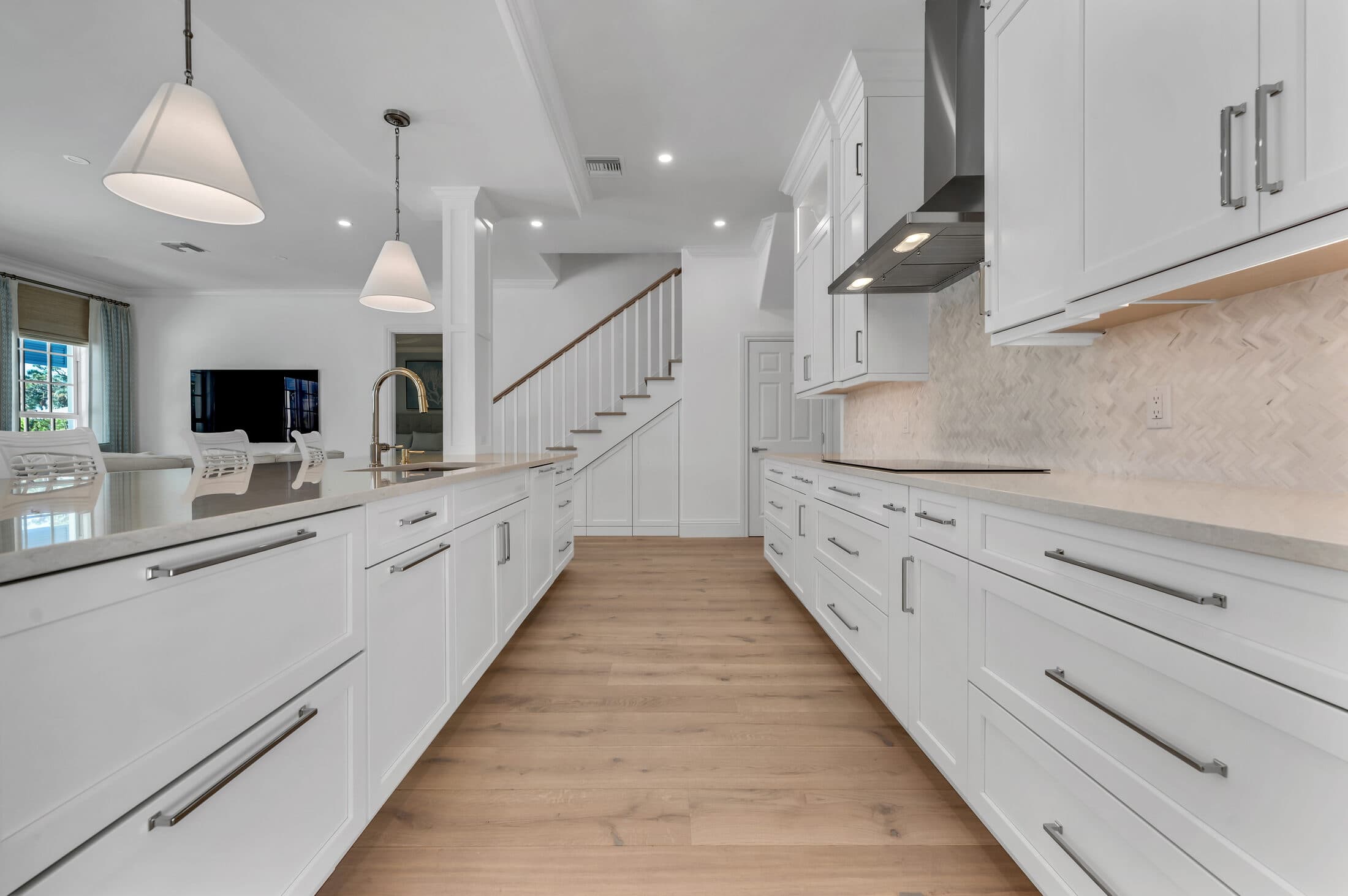
More from ProFloors on this
Bring your questions to the showroom.
Semi-custom, custom or stock cabinets in Naples: choose the right fit.