
Room by room · 7 min read
Best flooring for a Naples lanai: heat, drainage and texture
Choose outdoor porcelain or natural stone with wet feet, sun, drainage and balcony requirements in mind.

Reviewed by Cedric Eckenrode, ownerUpdated November 2026
The short answer
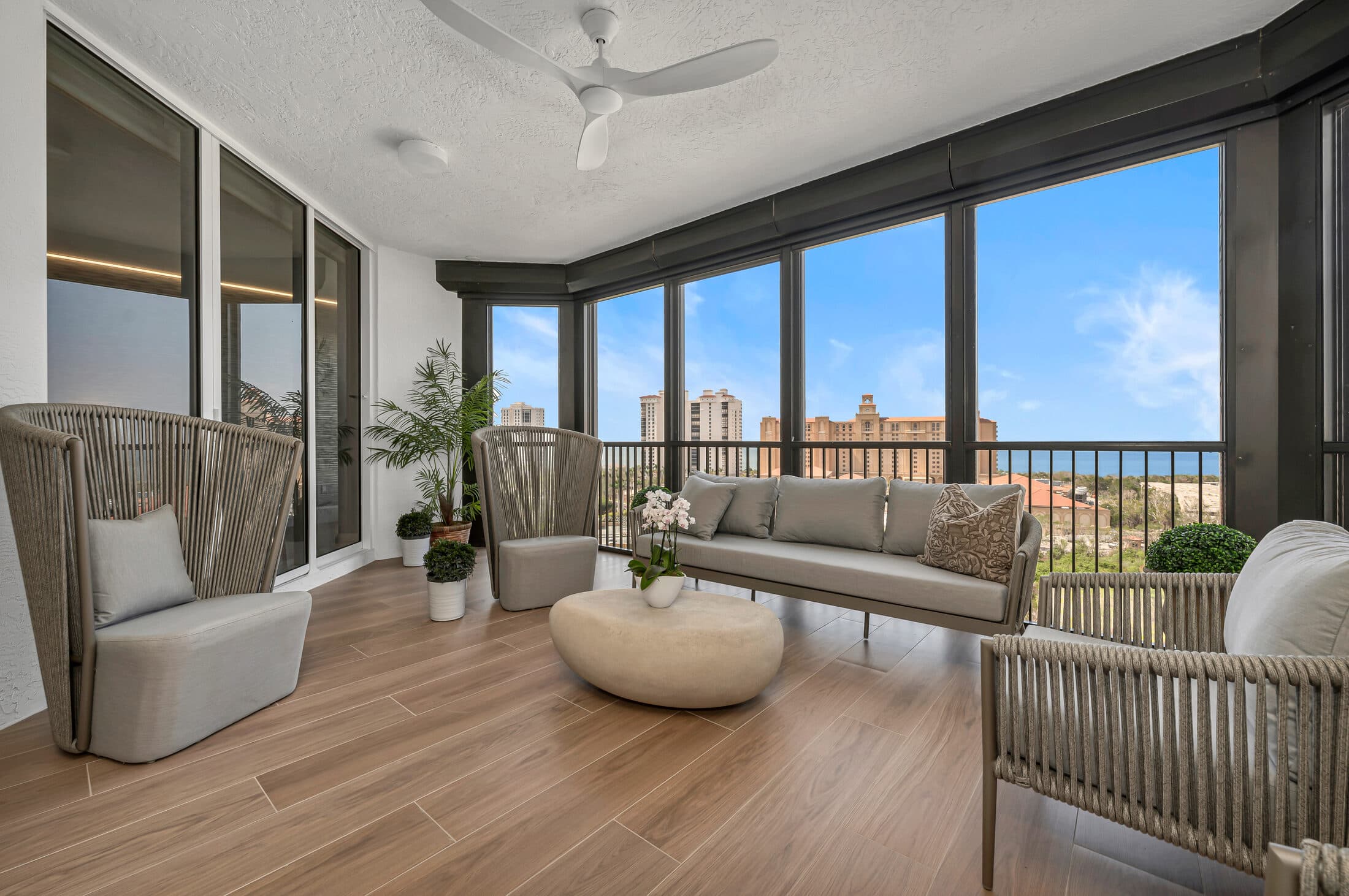
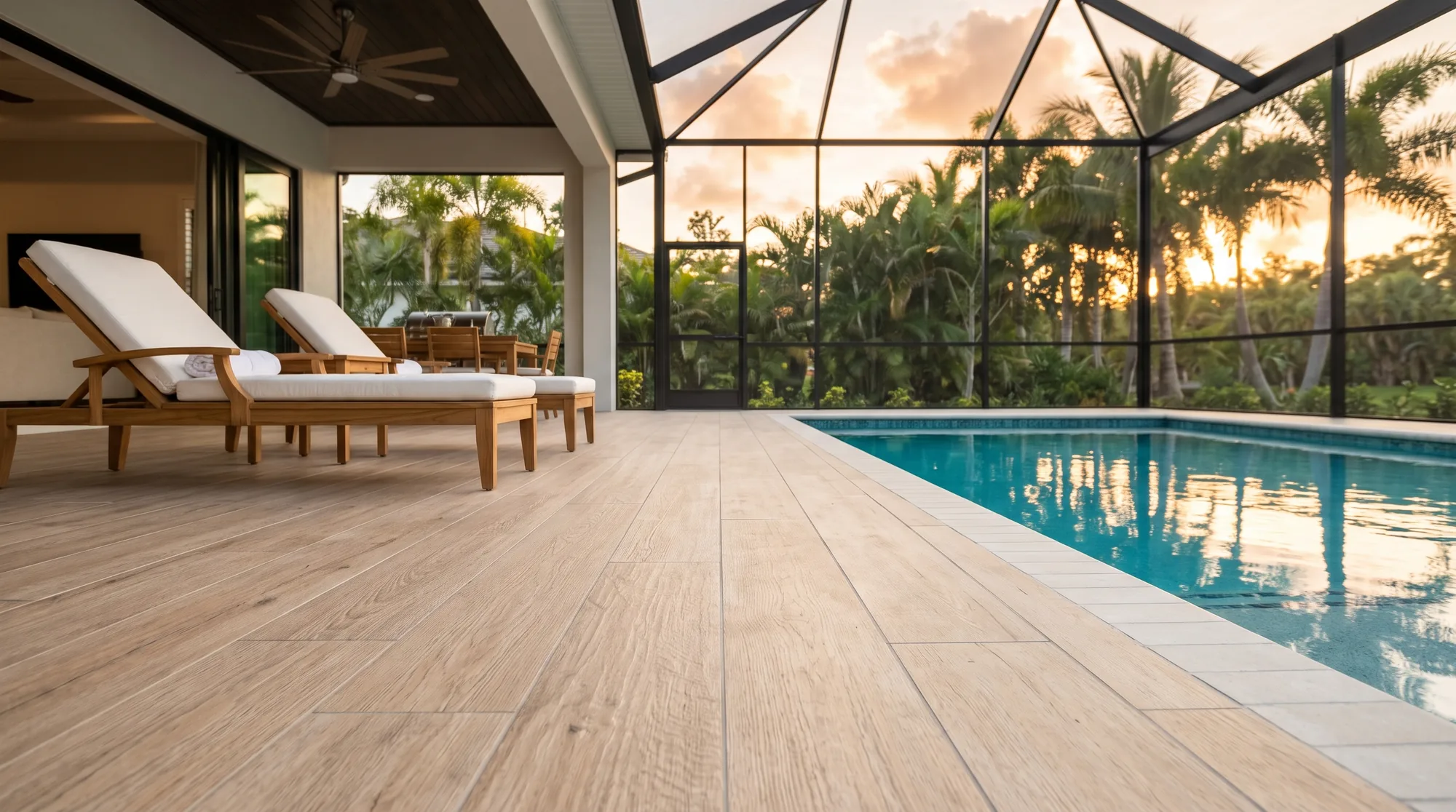
Start with outdoor-rated porcelain for a Naples lanai, in a finish the manufacturer classifies for exterior wet use. Natural stone works when you accept its care. Check heat and texture underfoot, plan drainage before the surface, and on a condo balcony get the association's requirements first. A Bay Colony project by ProFloors & Cabinets shows wood-look tile on a lanai.
Match the floor to the exposure.
Start with how you use the space. An open pool deck, a roofed lanai and a screened balcony have different exposure, even beside the same living room. Screens do not make an outdoor room a conditioned interior. Note where rain enters, where bare feet travel and how you clean the area.
In Southwest Florida, include afternoon sun and summer rain in that description. Photograph puddles after rain, the door threshold, drains and changes in level. Mention past leaks or loose finishes when you visit. These photos give the installer or building professional specific conditions to investigate before you cover the existing base.
Choose porcelain or natural stone.
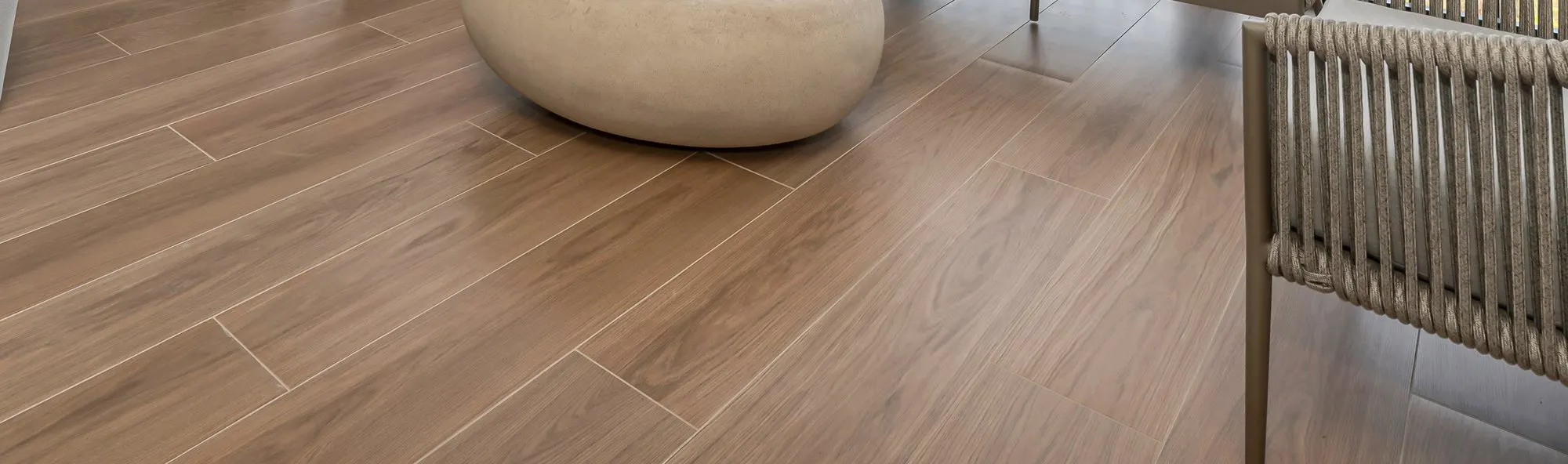
Outdoor porcelain
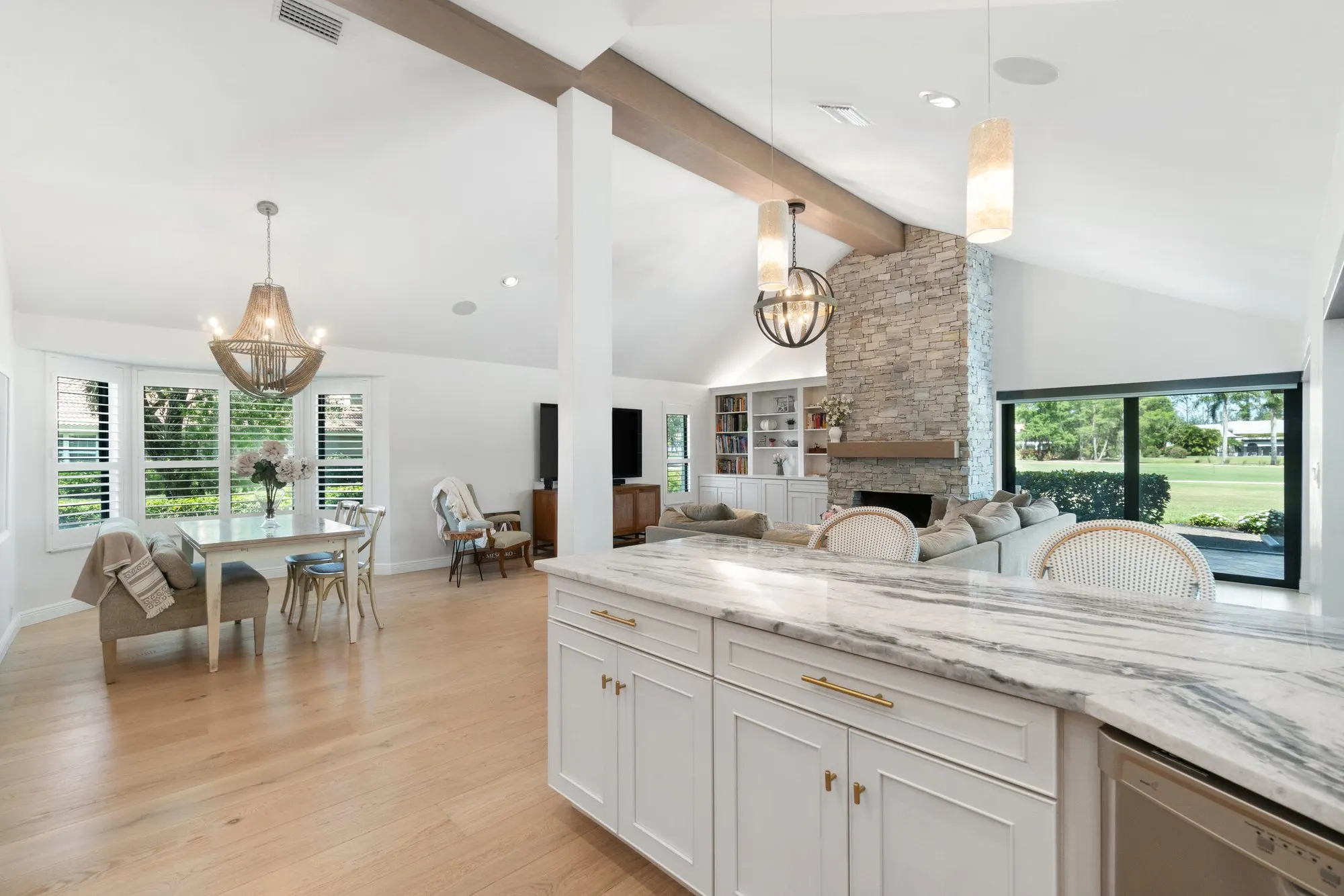
Natural stone
What to specify
Outdoor porcelain: The exact outdoor floor product, finish, format and approved installation system.
Natural stone: The exact stone, finish and thickness, with suitability for the exposure and intended use.
Appearance
Outdoor porcelain: Printed patterns can repeat. Set several pieces together to see how that reads across the floor.
Natural stone: Natural variation is part of the selection. Review a representative range of pieces together.
Care
Outdoor porcelain: Choose a cleaning routine for the tile, joints and any surface treatment.
Natural stone: Use stone-compatible cleaners and get sealing guidance for the selected stone.
For a lanai adjoining a wood floor, use a coordinating wood-look porcelain that its manufacturer rates for exterior use to carry the look outside. The project shown here, a Bay Colony lanai, pairs RIVA wood inside with RIVA tile outside. Study the color and pattern together at the doorway, where both surfaces will be visible from the great room.

Check the wet-use classification.
Get the manufacturer’s product-use classification for the exact finish under the ANSI A326.3 tile standard. The Tile Council of North America (TCNA) identifies Exterior, Wet as a category the manufacturer declares. A wet dynamic coefficient of friction, or DCOF (a wet slip rating), result of 0.42 alone is not outdoor approval. Specify the use category for your exposed lanai or pool surround, rather than relying on an interior wet-use designation.
Slip risk also depends on footwear, contaminants, maintenance, surface structure and drainage, as TCNA explains. Describe barefoot pool traffic, sunscreen, an outdoor kitchen or an inclined surface to your supplier. Those conditions belong in the product selection alongside the test result, so the finish is chosen for the way you will use it.
Match the finish
Match the classification to the texture and finish on the order. Tiles in the same color family can have different finishes.
Name the pool exposure
Include the pool surround, barefoot use, cleaning products and the pool’s water-treatment system in the suitability discussion.
Include surface treatments
For a proposed coating or sealer, get the manufacturer’s guidance on wet use and maintenance. The original surface test may not describe the treated finish.
Compare heat, glare and barefoot texture.
Judge a pool-deck sample in comparable sun exposure, with heat underfoot in mind. A pale color alone does not guarantee comfort in direct sun. Look at reflected brightness from inside the great-room sliders, too. You want the floor to work both under bare feet and in the view from your favorite chair.
Balance barefoot texture with a cleaning routine you will keep. Review the proposed finish for walking between the pool and house, moving dining chairs and keeping a table stable. Handle representative samples of the actual finish so texture is part of the choice alongside color, format and the interior view.
Resolve drainage before the surface.
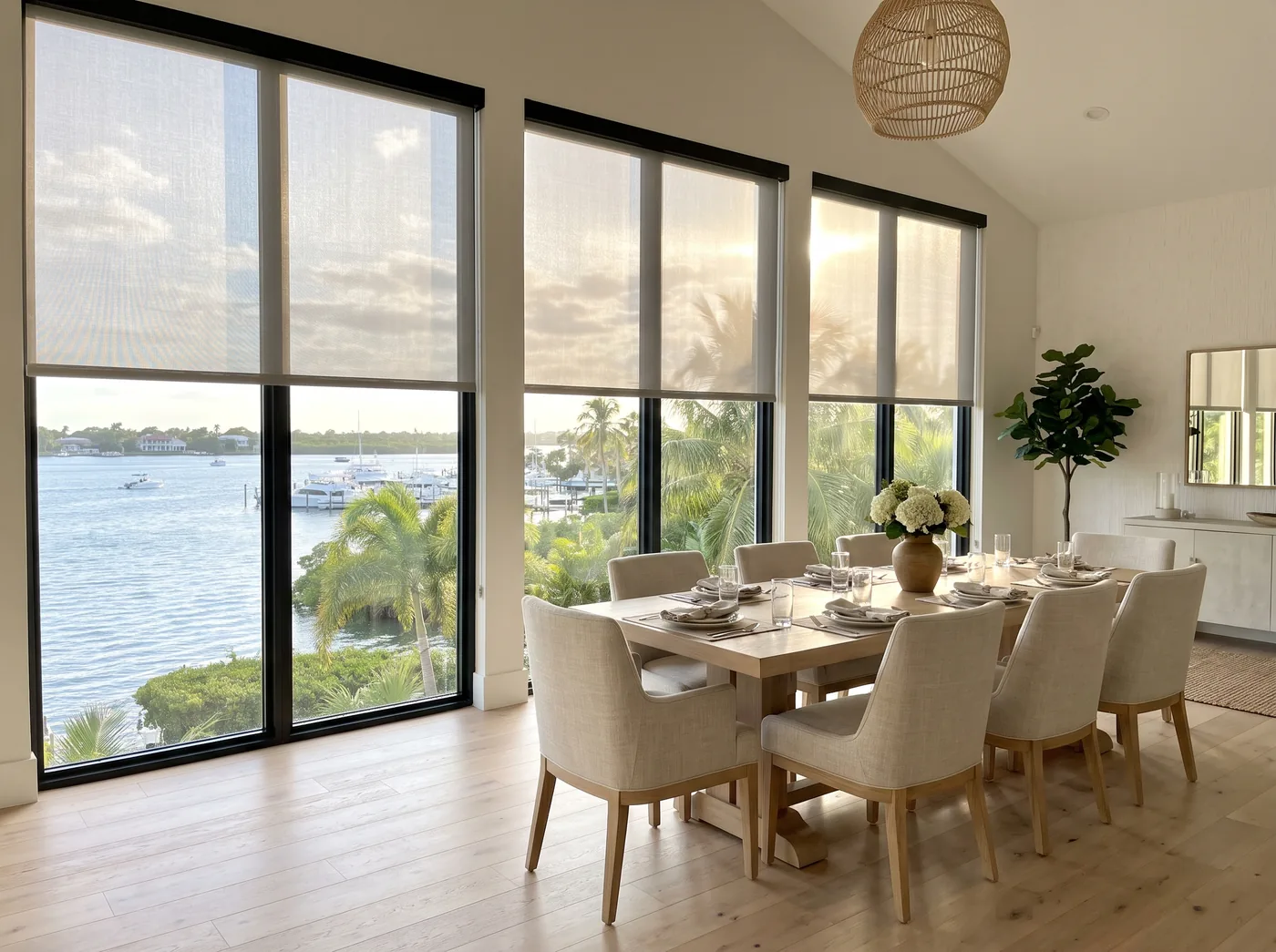
Resolve the path for water before choosing the final surface. Have the existing slope, drains, threshold and perimeter assessed by your contractor or, in a condo, the building’s manager. They should establish the required slope from the selected system and project requirements. Preparation for large tile must preserve the drainage falls.
Schluter’s exterior guidance treats balconies and terraces as complete water-management assemblies. Review movement joints, membrane connections, edges and drains together with the installer or building professional. Tile and grout alone are not waterproof. The protective layer and its connections belong in the assembly plan, separate from any stain-repellent sealer on the surface.
“We needed a lanai tiled. … Talk about attention to detail.”
Get condo balcony requirements first.
For an elevated Naples lanai, obtain the association’s current requirements before ordering; its rules govern the work. Your association manager can identify who approves changes to the finish and layers beneath it, and whether a building professional’s review is needed. Include added weight, assembly changes and any leak investigation in that discussion.
Weight and finished height
Include any retained floor, mortar and support layers in the total assembly review. Check the proposed height at doors and drains.
Sound requirements
Include any acoustic requirements for this location. The sound-control layer must suit the exterior assembly; an interior underlayment rating alone is insufficient.
Protection of the structure
Identify who assesses the existing water-control membrane, handles any replacement and details its connections to drains and walls. Put those responsibilities in the scope.
Use the Naples condo flooring planning checklist to organize association documents, deliveries and access alongside these outdoor-specific questions.
Choose care you can keep up.
Choose natural stone with its care instructions in hand. The Natural Stone Institute says sealing slows staining but does not prevent it. Get guidance for your selected limestone or travertine, including any resealing interval. Near the Gulf or a pool, include salt exposure and compatibility with cleaners, joints and adjacent metal details.
For porcelain, get cleaning instructions for ordinary soil and biological growth using products approved for the assembly. Keep drains accessible, with furniture and planters clear of recurring puddles. If this is a seasonal home, decide who checks the outdoor area while you are away and share the care instructions with that person.
Bring the outdoor plan to the showroom.
Bring photos of the whole lanai, thresholds and drains, a rough plan, sun direction and any condo documents. Add an interior-floor sample to coordinate the view through the sliders. Visit our North Naples showroom to discuss tile and stone selections.
Sources (3)
- TCNA: Dynamic Coefficient of Friction FAQ
Explains ANSI A326.3 use classifications, manufacturer-declared Exterior, Wet suitability and why DCOF alone cannot determine slip risk.
- Schluter Systems: Exterior Systems
Describes complete balcony and terrace assemblies for water management, including tile, stone and paver systems.
- Natural Stone Institute: Care and Cleaning
Supports stone-specific cleaning and the distinction between stain resistance and stain prevention after sealing.
Questions, answered.
Reviewed by Cedric Eckenrode, owner · Updated November 2026
The showroom
- 2033 Trade Center WayNorth Naples, FL 34109
- Mon–Fri 8am–5pmSat 10am–2pm
- What is the best tile for a lanai in Naples?
- Start with outdoor-rated porcelain whose exact finish suits the wet exposure and installation system. Get its manufacturer-declared Exterior, Wet classification, then review drainage, sun and barefoot traffic for your lanai. Natural stone is another option when you want its variation and accept its specific care requirements.
- Is a 0.42 DCOF rating enough for a pool deck?
- No. A 0.42 wet DCOF result alone does not establish suitability for an outdoor pool deck. TCNA identifies Exterior, Wet as a manufacturer-declared use category. Your designer or installer still needs to consider the actual surface, slope, contaminants, maintenance and intended use, including barefoot traffic around the pool.
- Can I tile a condo balcony in Naples?
- You may be able to, subject to your association’s rules and review of the balcony assembly. Obtain requirements for total weight, sound, drainage and the protective membrane before ordering. Your association manager can identify the approval needed for your balcony; an interior-floor approval may not cover that work.
- Is travertine or porcelain better for a lanai?
- Start with porcelain for your shortlist, and consider travertine when you prefer natural variation and accept stone-specific care. Review each exact finish for outdoor wet use and heat underfoot. Travertine needs cleaning and sealing guidance for the stone; porcelain needs a compatible cleaning routine for the tile and joints.
- One project managerFrom selection through installation
- No cost to come in and askBring your questions, photos or plans
- Trade buys here tooYour builder or designer can buy here
5.0· 46 Google reviewsBBB A+ AccreditedFamily-owned since 1998


Keep reading
All guides

More from ProFloors on this