

Room by room · 7 min read
Best shower floor tile in Naples: mosaics or larger formats
Compare mosaics, larger tile and natural stone, then check drainage, wet-use suitability and the membrane system beneath them.

Reviewed by Cedric Eckenrode, ownerUpdated November 2026
The short answer
Choose a shower-rated porcelain mosaic around a point drain (one central drain), where small pieces follow the sloping planes. Larger tile suits a linear drain and single slope. Natural stone suits only if it tolerates constant wet. Every choice needs a coordinated membrane and drain. Compare mosaics on the spinner rack at ProFloors & Cabinets in North Naples.
Choose the drain before the tile layout.
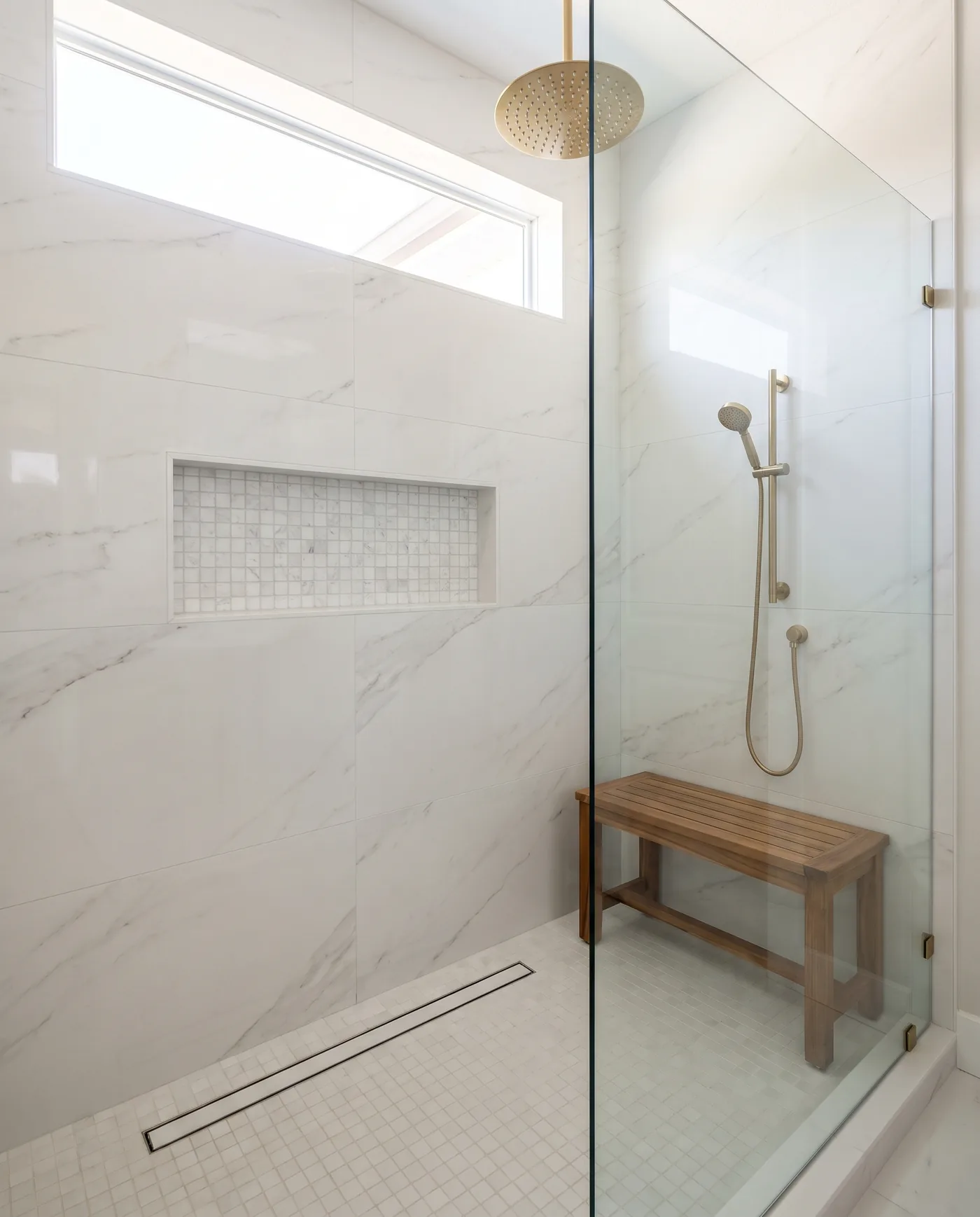
Choose the drain before ordering tile. Small pieces follow changes of plane around a point drain, while a linear drain can allow one sloping plane in an appropriate design. Schluter’s handbook describes the latter arrangement as accommodating larger-format tile. This makes the drain layout a useful first decision when you want a larger surface with fewer joints.
Have your designer or installer draw the drain position, slope directions, perimeter and entrance. A large tile crossing a change of plane needs planned cuts or a different layout. Review those cuts on the drawing before settling on a format, especially where the shower floor meets the walls or entry.
Compare mosaics with larger shower tile.

Small-format tile or mosaic
Larger-format tile
Slope layout
Small-format tile or mosaic: Small pieces can follow multiple planes around a point drain.
Larger-format tile: Needs a compatible plane or deliberate cuts at slope changes.
Joints
Small-format tile or mosaic: More grout joints to coordinate and clean.
Larger-format tile: Fewer joints in a suitable layout, with cuts and edges carefully resolved.
Wet-use selection
Small-format tile or mosaic: Use tile and sheet-mounting materials recommended for shower floors.
Larger-format tile: Use the shower recommendation for the exact surface, format and cut layout.
Supporting base
Small-format tile or mosaic: Match tile size and expected loads to the base manufacturer’s instructions.
Larger-format tile: Plan base compatibility and full support beneath each piece.
Best starting situation
Small-format tile or mosaic: A shower with a point drain and a preference for a finer floor pattern.
Larger-format tile: A planned drain-and-slope arrangement where a larger surface is important.
Schluter, for example, does not specify a minimum tile format for its KERDI-SHOWER foam trays, but recommends a mortar base for small tiles under heavy loads. That is a system-specific instruction. Use the selected base manufacturer’s tile-size and load requirements, including any concentrated load from a shower chair, before approving the floor.
For sheet-mounted mosaics, include the back of the sample in the selection. The mounting adhesive and backing need to suit wet use and allow the necessary bond to the setting material. The handbook warns that moisture-sensitive mounting adhesives can debond. Use the mosaic’s shower-floor documentation when reviewing the sheet with the installer. Daltile mosaic tile is on display at the showroom, where you can turn a sheet over and check its backing.
Check suitability for wet bare feet.
Select the exact tile for wet barefoot use, soap and the proposed slope. The Tile Council of North America (TCNA) says in its FAQ that A326.3 categories do not address ramps or inclined surfaces; ask the manufacturer for its shower-floor recommendation. TCNA also explains that dynamic coefficient of friction, or DCOF (a wet slip rating), alone cannot predict slipping. More grout joints or a matte label offer no guarantee.
Look at texture and cleaning together. Compare the surface feel, access to the joints and the routine for removing soap residue. Keep that routine with the tile and grout instructions. It should be practical for the people using and cleaning the shower, including guests in a seasonal home.
Specify a complete membrane and drain system.
Plan the membrane and drain system beneath the tile. Tile and grout are the wearing surface, not the water-containment system. TCNA’s shower methods (B421 and B422) describe a membrane over solid backing; the manufacturers and design professional decide what is compatible. Include backing, base, drain connection, seams and penetrations in the selected method.
Identify the actual assembly
Have the installer identify the shower method and instructions for the base, backing, membrane, mortar and drain. Keep those details together in the installation plan.
Resolve every water boundary
Include the floor-to-wall junction, corners, curb or curbless entrance, bench, niche and plumbing penetrations. Your designer or installer should show how the system continues through them.
Confirm testing before tile
Ask the installer to identify the required water test, cure time and person verifying the result before tile. Schluter recommends a water test before setting tile; use the selected system’s instructions and project requirements.
Review stone for continual wet exposure.
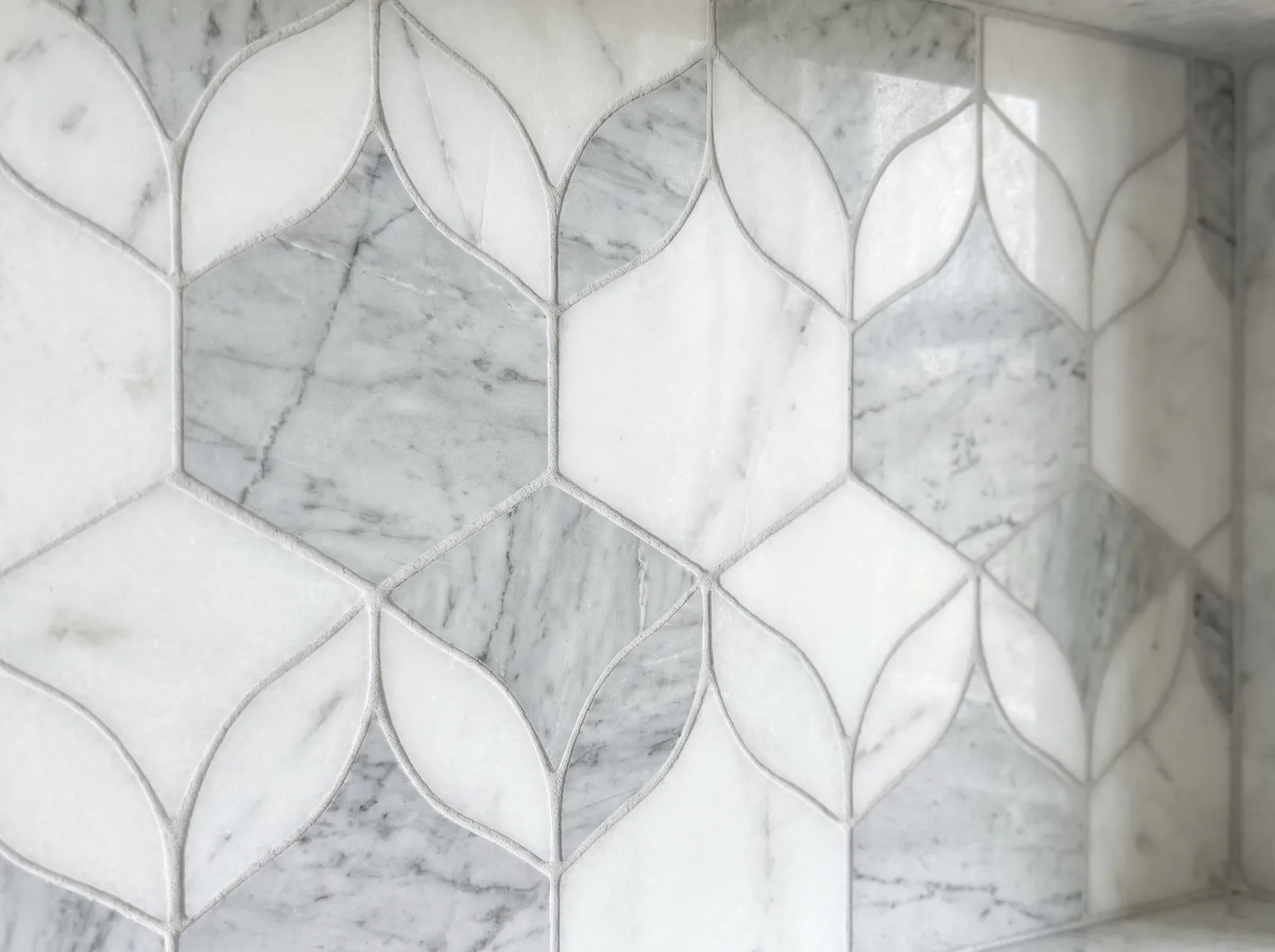
Choose natural stone from the supplier’s recommendation for the actual material. Include moisture sensitivity, resin or mesh backing and any special setting materials in the decision. The handbook notes that some stones can darken or warp with water exposure. Choose porcelain for a stone appearance when those material-specific requirements do not suit your plans.
Marble and limestone also need care suited to acid-sensitive stone, including a way to remove soap residue. The Natural Stone Institute recommends non-acidic care and notes that many stones do not require sealing. Use an impregnator only where recommended; it does not replace the membrane or the stone’s care routine.
Confirm the details you will use daily.
Choose a flat mosaic if you dislike the feel of rounded pebbles or how hard they are to clean. Pebbles need particular drainage attention: the handbook explains that their shape and recessed grout can obstruct water flow. Review slope and setting materials with the installer. Put a pebble sample beside a flat mosaic to judge joint width and foot comfort.
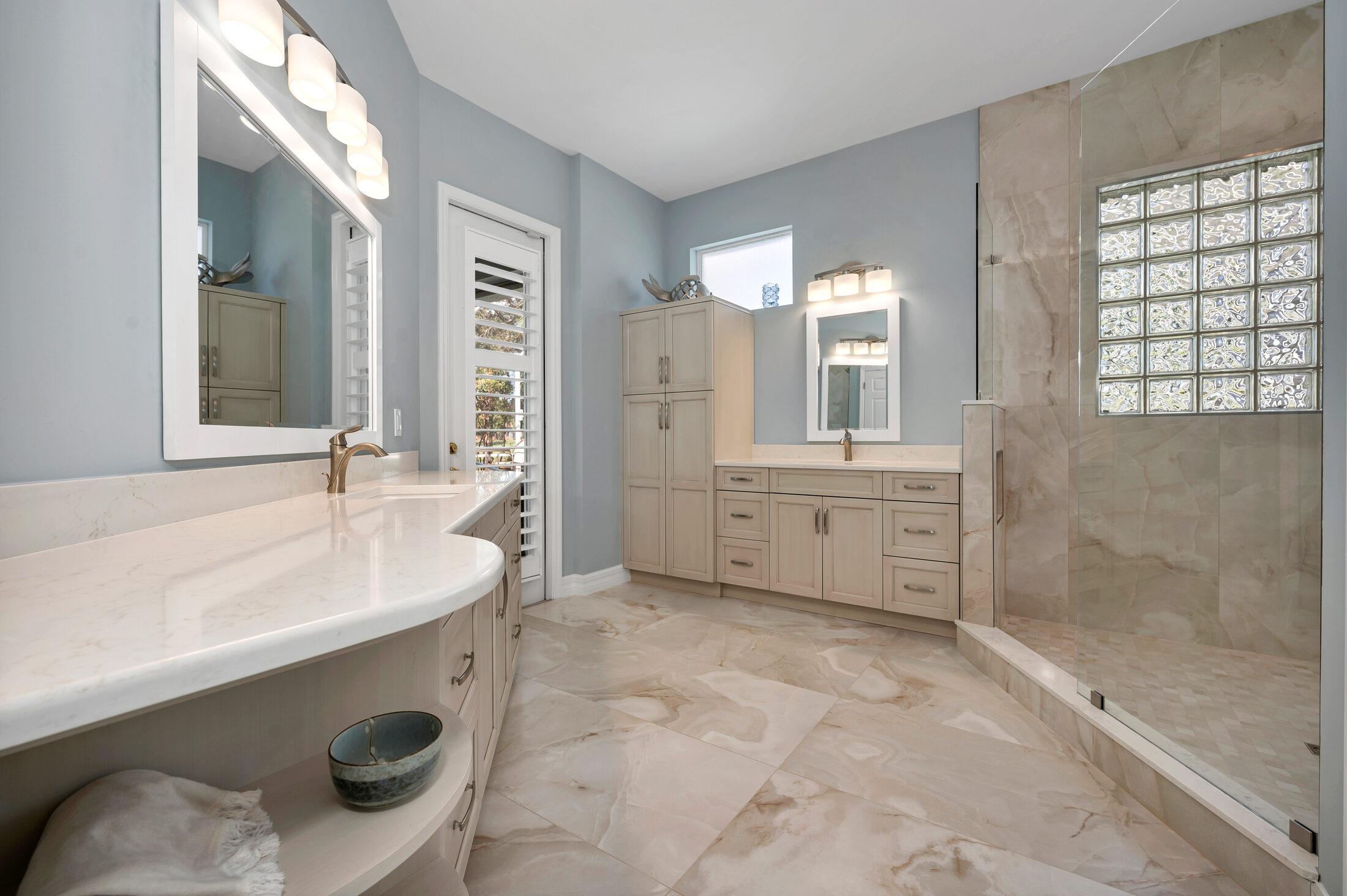
In a Naples condo, the association’s rules govern changes to the drain or shower entry; obtain the approval requirements before work. For a seasonal home, keep cure time, first use and care instructions with your return plans. Use the bathroom-flooring guide to coordinate the main floor’s color and format with the shower.
Bring the shower plan and drain details.
Bring shower dimensions, the drain location, entry photos and plans for a bench, niche or curbless opening. At the ProFloors showroom, place shower-floor candidates beside the wall tile and grout. Narrow your shortlist by drain layout, documented shower suitability and the care you want. Take those selections to your designer or installer to resolve the system before ordering.
Sources (4)
- TCNA: shower methods
Supports treating the membrane and backing as a compatible combination within the shower method.
- TCNA: ANSI A326.3 questions
Explains product use classifications, friction limitations and the separate consideration of inclined surfaces.
- Schluter Systems: shower installation handbook
Supports system-specific tile size and load checks, linear-drain layouts, mosaic backing review, water testing and stone-selection cautions.
- Natural Stone Institute: care and cleaning
Supports non-acidic care for sensitive stone and product-specific decisions about impregnating sealers.
Questions, answered.
Reviewed by Cedric Eckenrode, owner · Updated November 2026
The showroom
- 2033 Trade Center WayNorth Naples, FL 34109
- Mon–Fri 8am–5pmSat 10am–2pm
- What is the best tile for a shower floor?
- Choose a porcelain mosaic approved for shower floors, particularly around a point drain. Larger tile works with a compatible slope and drain layout. Use the manufacturer’s recommendation for the exact tile’s wet use, then keep that documentation with the base requirements and cleaning instructions before ordering the floor.
- Do shower floors have to use small tiles?
- No, larger tiles can work where the shower’s slope and drain design accommodate them, sometimes with planned cuts. Small mosaics follow several sloping planes more readily, making them a good starting point around a point drain. Use the selected shower-base manufacturer’s size and load requirements to settle the format.
- Are mosaic shower floors less slippery?
- Mosaics are not automatically less slippery. Their joints are one part of the finished surface, while tile texture, soap, drainage, slope and cleaning also affect use. Ask for the manufacturer’s shower-floor recommendation. TCNA cautions that DCOF data alone cannot predict whether someone will slip on a particular surface.
- Can natural stone be used on a shower floor?
- Yes, natural stone can work when the specific stone, backing, setting materials and shower assembly suit wet exposure. Some stones can darken or warp, and calcareous stones need non-acidic care. Use the supplier’s recommendation for that material, with a separate membrane and drain system beneath the finished tile.
- One project managerFrom selection through installation
- No cost to come in and askBring your questions, photos or plans
- Trade buys here tooYour builder or designer can buy here
5.0· 46 Google reviewsBBB A+ AccreditedFamily-owned since 1998



Bring your questions to the showroom.
Best shower floor tile in Naples: mosaics or larger formats?