
Room by room · 6 min read
Best flooring for a Naples entryway: sand, wet shoes and sightlines
Choose porcelain, hardwood or natural stone for a Naples entryway that connects with the rest of your home.

Reviewed by Cedric Eckenrode, ownerUpdated November 2026
The short answer
Choose porcelain floor tile for a Naples entryway that sees regular sand and wet shoes. Choose engineered hardwood when carrying the great-room floor through the foyer matters and you can keep grit and water off it. Natural stone works with stone-specific care. Plan mats and transitions with the material. Compare all three at ProFloors & Cabinets in North Naples.
Follow the route you actually use.
Follow your household’s usual route home. You may enter through the garage, a side door or the sliders after using the pool. Identify the doorway carrying most of the grit. Plan a place for shoes, umbrellas and damp bags to pause before anyone crosses the living area, even if that entrance is outside the formal foyer.
Picture a rainy-season arrival as well as a dry Naples afternoon. Note whether the door has a covered approach and where a mat fits without catching the door. A condo corridor entrance has different exposure from a ground-level doorway beside the driveway. Choose for the entrance you have and how often it gets wet.
Put wet-shoe use first at a busy entrance; give visual continuity more weight in a dry formal foyer. If water enters beneath the door or through the building, have the cause resolved before replacing the floor. That is a repair for your contractor or building manager, before you pick a floor.
Compare the material and its finish.
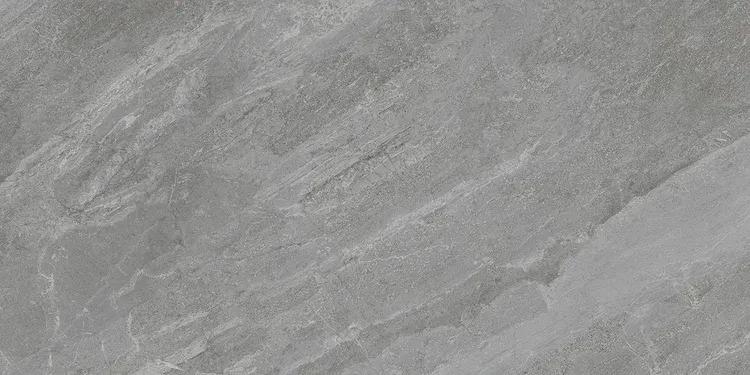
Porcelain floor tile
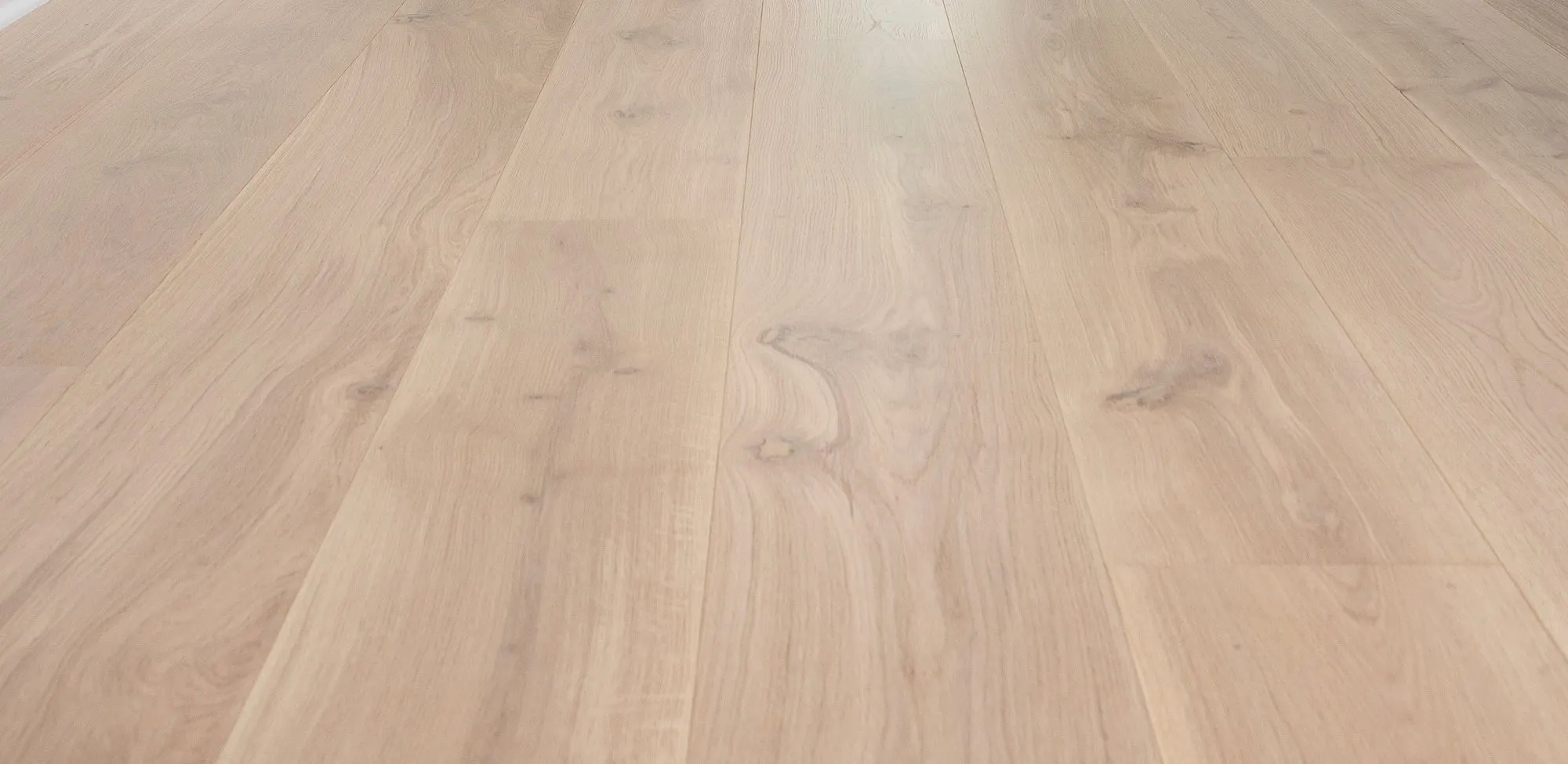
Engineered hardwood
Why consider it
Porcelain floor tile: A practical starting point for a busy entrance with regular wet-shoe traffic.
Engineered hardwood: Carries the great-room wood floor through the foyer for one connected view.
What to inspect
Porcelain floor tile: Floor-use suitability, wet-use classification, surface texture, grout and the approved installation assembly.
Engineered hardwood: Finish-care instructions, moisture limits and the household’s ability to remove grit and dry tracked-in water.
Design decisions
Porcelain floor tile: Set the tile scale, grout color and boundary of the arrival zone together.
Engineered hardwood: Choose board direction, grain and sheen with the adjoining great room in view.
Choose natural stone with its cleaning requirements in mind. The Natural Stone Institute notes that acidic cleaners can affect calcium-carbonate-based stone. Get care guidance for the exact marble, limestone or travertine and its finish, including whether sealing is appropriate. Sealing slows staining; it does not prevent it. Ask the stone supplier for the right sealer and how often to reapply.
Set several tiles or boards together to judge variation and joints. View the group from the entrance and the great room. If you like strong veining or a contrasting border, make it a deliberate part of the arrival view. The adjoining floor belongs beside those samples before you settle on a pattern.
Keep grit away from the finish.
Use entrance mats and remove dry grit regularly: abrasive debris can damage the finish. The Natural Stone Institute recommends mats inside and outside an entrance; the National Wood Flooring Association (NWFA) also covers mats and grit removal for wood. Choose a backing and cleaning tools compatible with the selected floor, and keep the mat itself clean.
Allow space to stop
Mark a place to wipe shoes and put down a damp umbrella. Check that the mat stays stable, lies flat and does not interfere with the door swing.
Choose a workable cleaning routine
Remove dry grit before damp cleaning. Use a vacuum attachment and cleaner approved for the finish, following the manufacturer’s care instructions.
View the finish in entrance light
Look across samples from a low angle. Judge sheen, color and surface pattern together, including how visible marks will be in that light.
Plan for wet shoes and rainy arrivals.
For an entrance walked on while wet, have your supplier match the tile’s intended use to that exposure. The tile industry’s ANSI A326.3 standard, explained by the Tile Council of North America (TCNA), separates tile rated for dry interior floors from tile rated for wet ones. A glossy or matte label alone is insufficient: slip risk also depends on water, grit, cleaning residue and footwear, alongside the DCOF (wet slip rating) result.
Remove tracked-in water promptly and follow the product’s cleaning instructions. For hardwood, NWFA advises against traditional wet mopping and steam cleaners. Choose a care routine you can keep at the busiest door. If your usual cleaning involves repeated soaking, reconsider the material or change the routine before choosing wood for that entrance.
Connect the foyer to the great room.
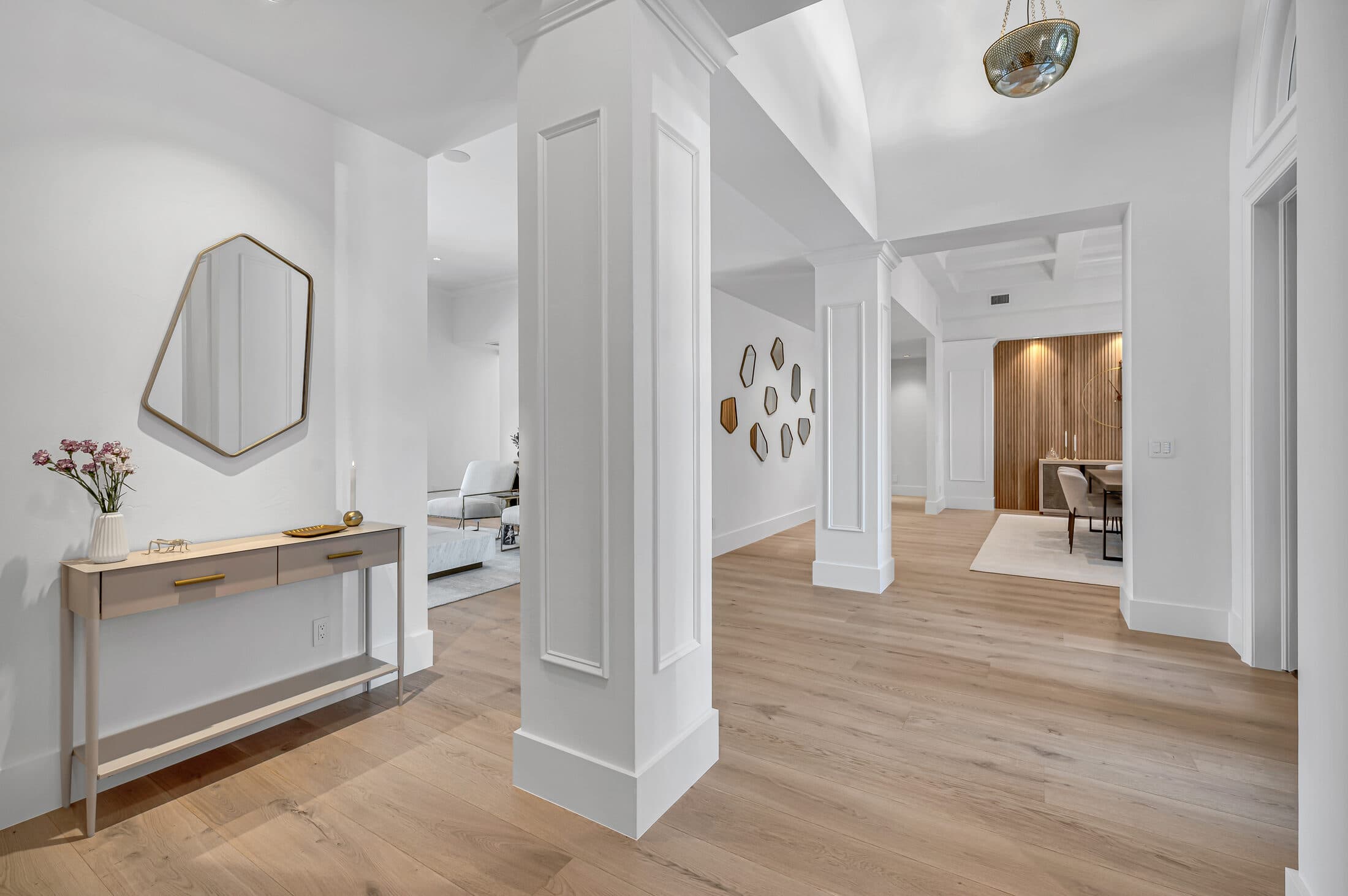
Use continuous hardwood when the foyer and great room share a long view and the entrance conditions suit wood. A defined porcelain entry zone is another way to mark the arrival area. Test its edge at a doorway or change in room width so the boundary relates to the architecture.
Place the two physical samples together and check undertone, sheen, pattern scale and the transition profile. If wood-look tile creates a near-match you dislike beside real wood, try a coordinated stone look. Aim for a pairing you like from both sides of the doorway, rather than trying to imitate the adjoining floor.
Mark the transition on the plan and look at it from the front door. Include the edge profile in the sample comparison.
Check the details beneath the design.
Have the installer check the total finished height, including preparation, setting materials and approved underlayment. Include interior door clearance, the adjoining floor, required movement space and transitions. Arrange for the exterior-door threshold and weather seals to be checked by the appropriate professional. Review the proposed edge detail before finalizing a decorative layout.
For a concrete slab, review the selected system’s preparation and moisture requirements; the hardwood-on-a-Florida-slab guide covers the wood-floor questions. In a condo, obtain current association and acoustic requirements before choosing the assembly. A corridor entrance may still need approval, and the association’s rules govern the work.
Bring the arrival view to the showroom.
Bring a photo looking in from the doorway and one looking back toward it, a rough plan and a sample of the adjoining floor. Include threshold close-ups and any association documents. At our North Naples showroom, see the shortlist beside the finishes you will keep, then discuss what still needs checking at home.
Sources (3)
- TCNA: Dynamic Coefficient of Friction FAQ
Explains interior wet-use classifications and the role of contaminants, footwear and maintenance in slip risk.
- Natural Stone Institute: Care and Cleaning
Supports entrance mats, grit removal, stone-compatible cleaning and the limits of impregnating sealers.
- NWFA: Wood Flooring Installation Guidelines
Provides wood-floor protection and care guidance, including mats, abrasive debris and avoiding excessive cleaning moisture.
Questions, answered.
Reviewed by Cedric Eckenrode, owner · Updated November 2026
The showroom
- 2033 Trade Center WayNorth Naples, FL 34109
- Mon–Fri 8am–5pmSat 10am–2pm
- What is the best flooring for an entryway in Naples?
- Choose porcelain floor tile where sand and wet shoes are regular visitors. Engineered hardwood is worth considering for an entry connected to the great room when you can manage moisture and grit. Review the exact finish, care instructions and transition detail with the conditions at your doorway in mind.
- Is porcelain tile good for an entryway?
- Yes, choose porcelain intended for floor traffic and the entrance’s wet-shoe exposure. Review its use classification, texture and care instructions alongside grout and substrate preparation. Slip risk depends on the actual finish and walking conditions, so keep grit and tracked-in water off the floor rather than relying on a matte label.
- Can hardwood run through the foyer into the living room?
- Yes, when the hardwood and installation system suit both spaces. Plan moisture care and compatible mats at the entrance, then ask the installer to show required movement joints and transitions on the layout. Over concrete, include the slab assessment before settling on the installation approach for the connected rooms.
- How do I protect entryway flooring from beach sand?
- Use compatible entrance mats and remove dry grit frequently with tools approved for the floor. Give people somewhere to wipe or remove shoes before crossing the foyer, and clean the mat regularly. Follow the finish-specific care instructions so the arrival routine protects the surface you chose.
- One project managerFrom selection through installation
- No cost to come in and askBring your questions, photos or plans
- Trade buys here tooYour builder or designer can buy here
5.0· 46 Google reviewsBBB A+ AccreditedFamily-owned since 1998



Bring your questions to the showroom.
Entryway flooring for sand, wet shoes and open views.