

Compare materials · 7 min read
Porcelain vs natural stone: choose for the room
Compare porcelain, marble, travertine and limestone for daily care, wet floors and a Naples lanai.

Reviewed by Cedric Eckenrode, ownerUpdated November 2026
The short answer
Choose porcelain for a busy Naples kitchen when a stone look and simple daily care matter most. Choose marble, travertine or limestone when natural variation is worth extra care, including keeping acids off marble, travertine and limestone. For a wet floor or lanai, check the exact product's slip classification. ProFloors & Cabinets sets porcelain beside natural stone in North Naples.
Choose for the room’s daily demands.
A kitchen floor receives different spills from a bedroom floor, while a screened lanai can still get wet. Decide what matters most: a particular piece of natural stone, a consistent visual pattern, or a cleaning routine that someone else can follow while you are away.

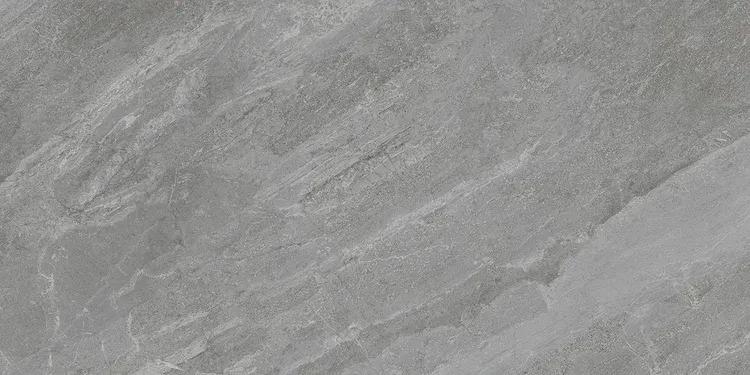
Porcelain tile

Marble, travertine + limestone
Appearance
Porcelain tile: Manufactured pattern; review repeat and variation across several tiles.
Marble, travertine + limestone: Natural variation; review a representative selection of the actual material.
Absorption
Porcelain tile: The Tile Council of North America (TCNA) defines porcelain as tile that absorbs 0.5% or less of its weight in water.
Marble, travertine + limestone: Absorption varies by stone and belongs in the individual material review.
Sealing
Porcelain tile: Ask for the care instructions for the tile and for the grout; they are separate.
Marble, travertine + limestone: An impregnator can improve stain resistance where the stone needs one.
Acid exposure
Porcelain tile: Use cleaners approved for the selected tile and grout.
Marble, travertine + limestone: Acid-sensitive materials; citrus and unsuitable cleaners can alter the finish.
Wet and outdoor use
Porcelain tile: Check the maker’s use rating for the exact finish; one finish in a collection can suit outdoors and another not.
Marble, travertine + limestone: Stone, finish, exposure and installation system belong in the specification.
Choose the stone and finish together.
With marble, look at the veining and finish together. A polished sample and a honed sample can make the same stone feel quite different. For a frequently used surface, think beyond the first impression: would a dull mark from a bathroom product or a drink change how you feel about the choice?
For travertine, include any filler in the care discussion. With limestone, review several pieces for tone and surface variation. Look at a representative selection of the material you are considering, with its finish and treatment identified. Then match that selection to the floor, wall or exterior location in your plan.
Separate stain resistance from acid etching.
Porcelain’s low absorption describes the tile body. Water management also depends on the joints, perimeter and underlying construction. For a shower or doorway leading outside, include the whole installation in the specification. Daltile porcelain is on display at the showroom.
The Natural Stone Institute explains that impregnating products act as repellents. They improve stain resistance without making stone stain-proof, and some stones need no sealing. Get care guidance for the selected stone, including a compatible product and signs that renewal is due. There is no single resealing interval for all three materials.
Acid etching changes the surface itself. A stain-repellent treatment does not make a calcium-carbonate stone acid-resistant. Before choosing marble, travertine or limestone, look at an example of an etched area. Decide whether that change is acceptable for the room you use most.
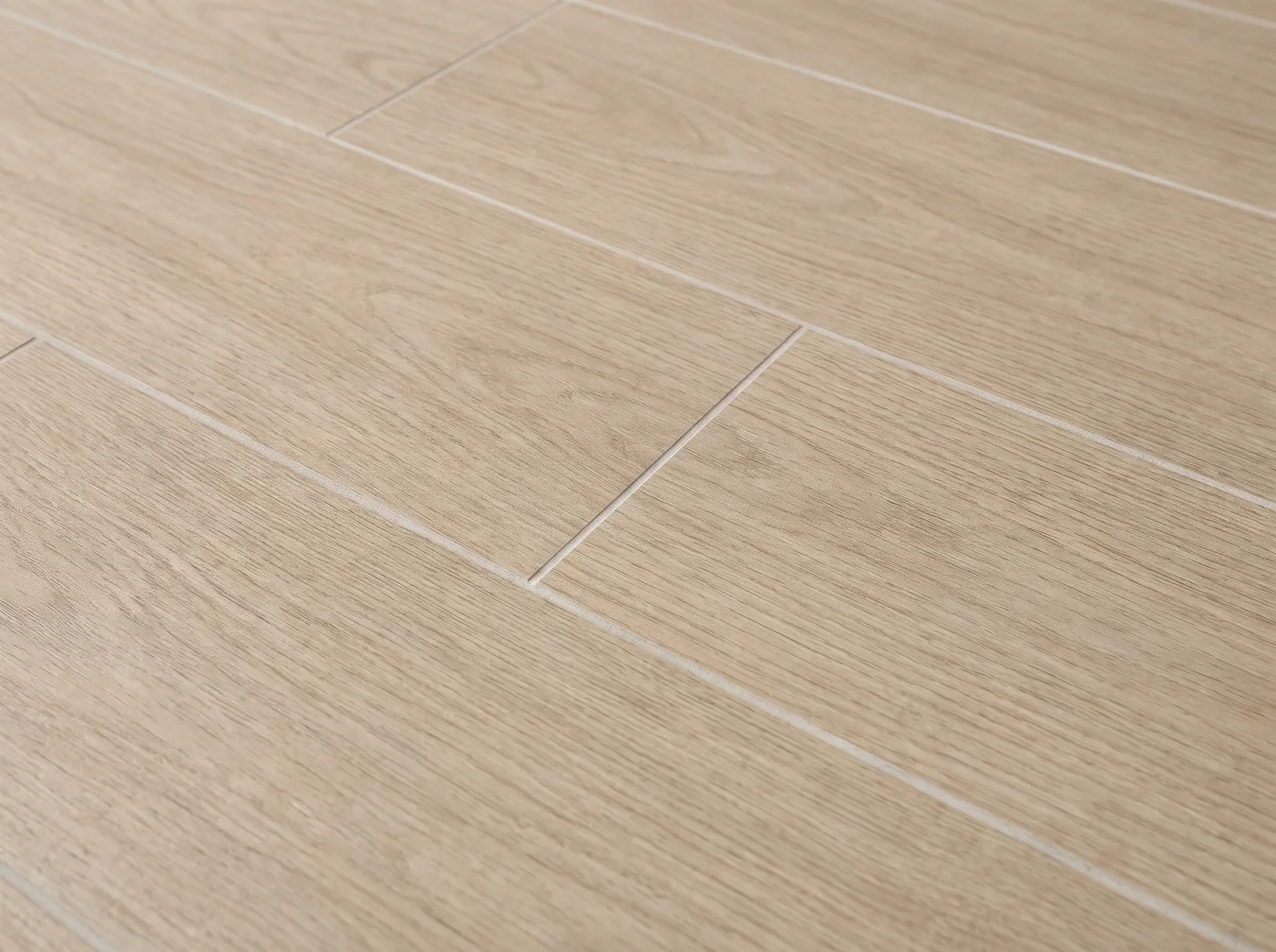
Read slip data in context.
ANSI A326.3 provides a test method for dynamic coefficient of friction, or DCOF (a wet slip rating), and use classifications for hard surface flooring. TCNA explains that DCOF is only part of assessing slip risk. Water, soap, footwear, surface structure, maintenance and drainage also matter; a test result cannot guarantee that nobody will slip.
Interior, Wet and Exterior, Wet are separate classifications. The 0.42 wet DCOF figure often quoted on tile specifications does not, on its own, establish outdoor suitability. Request the manufacturer’s classification for the exact finish, where one exists, and review it against the intended location. Include matte and honed surfaces in that review rather than judging by appearance alone.
“Enjoyed working with Eli, from selecting tile to on-site visits, ensuring all my questions were answered.”
Treat the lanai as its own specification.
Use related colors to connect a Naples living room and lanai, with a different finish outside where needed. Give the installer or designer a clear picture of the exposure: enclosed, screened or open; rain reaching the floor; and any route to a pool. Include barefoot use when discussing the intended setting.
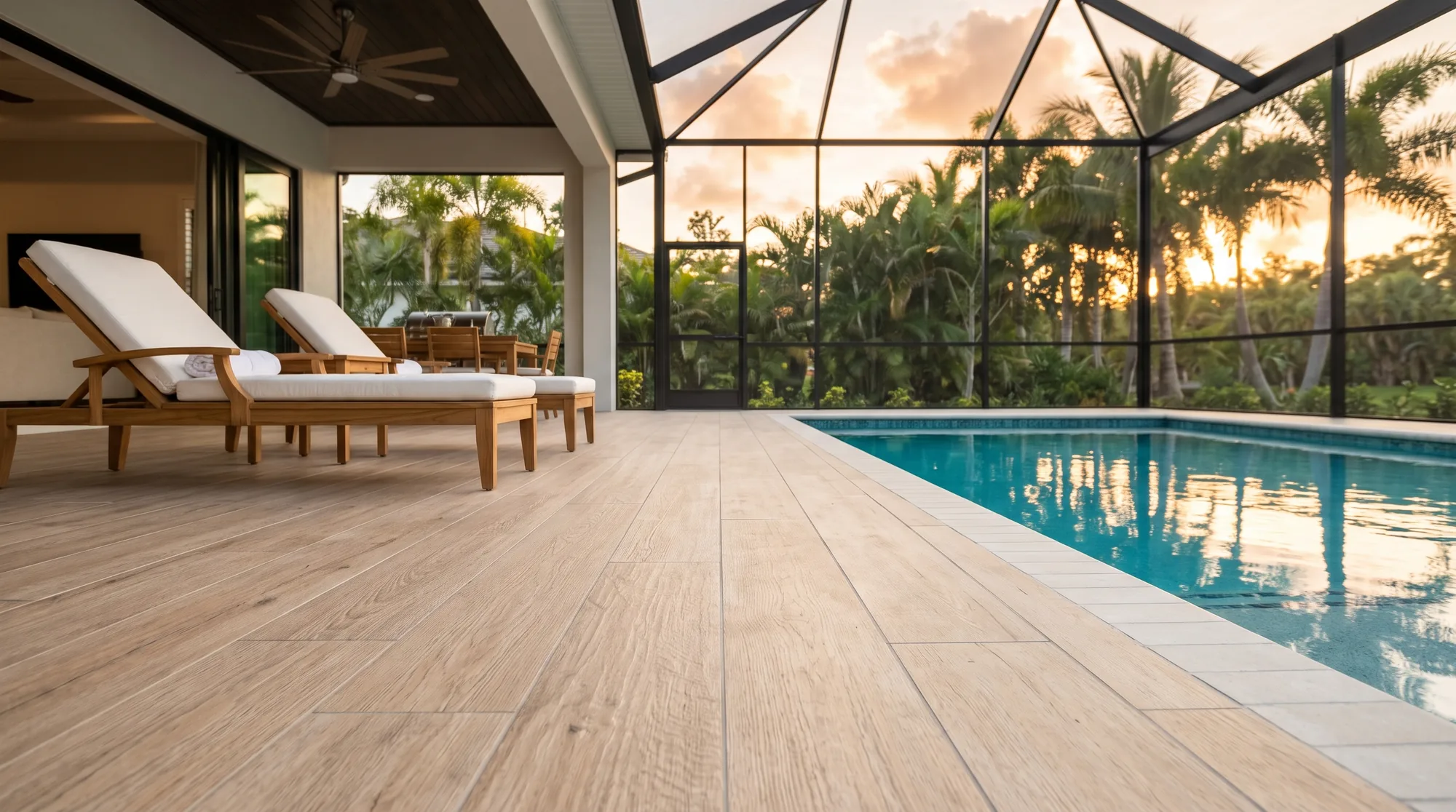
Product and finish
Request written suitability for the exact exterior use. For stone, include any filler or sealer; for tile, check the specific finish rather than another finish in the collection.
Drainage and transitions
Ask the installer or designer to review slopes, drainage, thresholds, movement details and the installation assembly. Resolve drainage problems before relying on a new surface.
Exposure and upkeep
Identify rain, pool splash, nearby planting and coastal exposure. Ask what cleaning and maintenance the selected surface and any treatment require in that setting.
Choose a cleaning routine you will follow.
For natural stone, the Natural Stone Institute recommends frequent dust mopping, prompt spill attention and suitable mild cleaners. Sand and grit can damage the surface. Keep vinegar, lemon-based cleaners and other acidic products away from these stones. An etch mark may need a stone restoration specialist rather than more scrubbing.
For porcelain, choose a cleaner that suits both the tile and grout, and follow any treatment instructions. Consider how you will clean a textured finish, especially outside where soil collects. In a seasonal home, leave the selected product instructions with whoever handles housekeeping so the routine stays consistent while you are away.
Bring your room to the showroom.
Bring photos of the existing floor, adjoining rooms and outdoor connection, plus a plan or approximate dimensions. Add cabinet or fabric samples that will remain. Explain how you use the home and which cleaning tasks matter most. For a condo, bring the current association requirements; those rules govern the proposed work.
Start a porcelain shortlist with our tile selection page. Bring your favorite looks to the showroom and review several pieces with the grout and adjoining finishes. Seeing the pattern across more than one tile gives you a better basis for a whole-room decision.
For natural variation, start with the natural stone page, then bring the same room details to ProFloors & Cabinets in Naples. Request a showroom visit to look at marble, travertine or limestone with the care requirements beside the samples, so appearance and upkeep stay part of the same choice.
Sources (3)
- TCNA: Porcelain vs. Non-Porcelain
Defines porcelain by tested water absorption and explains why a specific product’s area-of-use guidance matters.
- TCNA: ANSI A326.3 and DCOF questions
Explains DCOF limitations, manufacturer-declared product use classifications and the distinction between interior and exterior wet applications.
- Natural Stone Institute: Care and Cleaning
Supports the distinction between stain resistance and acid etching, individual sealing needs and routine stone care.
Questions, answered.
Reviewed by Cedric Eckenrode, owner · Updated November 2026
The showroom
- 2033 Trade Center WayNorth Naples, FL 34109
- Mon–Fri 8am–5pmSat 10am–2pm
- Is porcelain tile better than marble for a kitchen floor?
- Porcelain is the practical starting point when easier spill care matters most. Marble suits a kitchen where natural variation is worth the extra care, including attention to acidic spills. Choose the exact floor finish and grout together, with slip information and the manufacturer’s cleaning instructions included in the decision.
- Does sealing make travertine resist all water and stains?
- No. An appropriate impregnating treatment improves stain resistance; it does not prevent every stain or replace the installation’s water-management details. Follow the supplier’s and treatment manufacturer’s guidance for the selected travertine. Acidic spills and cleaners remain a separate concern because sealing does not make the stone acid-resistant.
- Can porcelain tile or natural stone be used on a Naples lanai?
- Yes, when the exact product, finish and installation suit the exposure. Give the installer or designer details of rain, pool splash, drainage and barefoot use, along with the supplier’s exterior-use guidance and slip information. A screened enclosure still needs a floor selected for the conditions it will face.
- Does a DCOF of 0.42 mean a floor is slip-safe?
- No. DCOF helps assess a surface but cannot guarantee against slipping. TCNA also identifies contaminants, footwear, drainage, surface structure and maintenance as factors. Review the product’s ANSI A326.3 use classification, where one exists, with the installer or designer, especially when choosing a finish for an exterior wet area.
- One project managerFrom selection through installation
- No cost to come in and askBring your questions, photos or plans
- Trade buys here tooYour builder or designer can buy here
5.0· 46 Google reviewsBBB A+ AccreditedFamily-owned since 1998


Keep reading
All guides

More from ProFloors on this
Bring your questions to the showroom.
Porcelain vs natural stone: choose for the room.