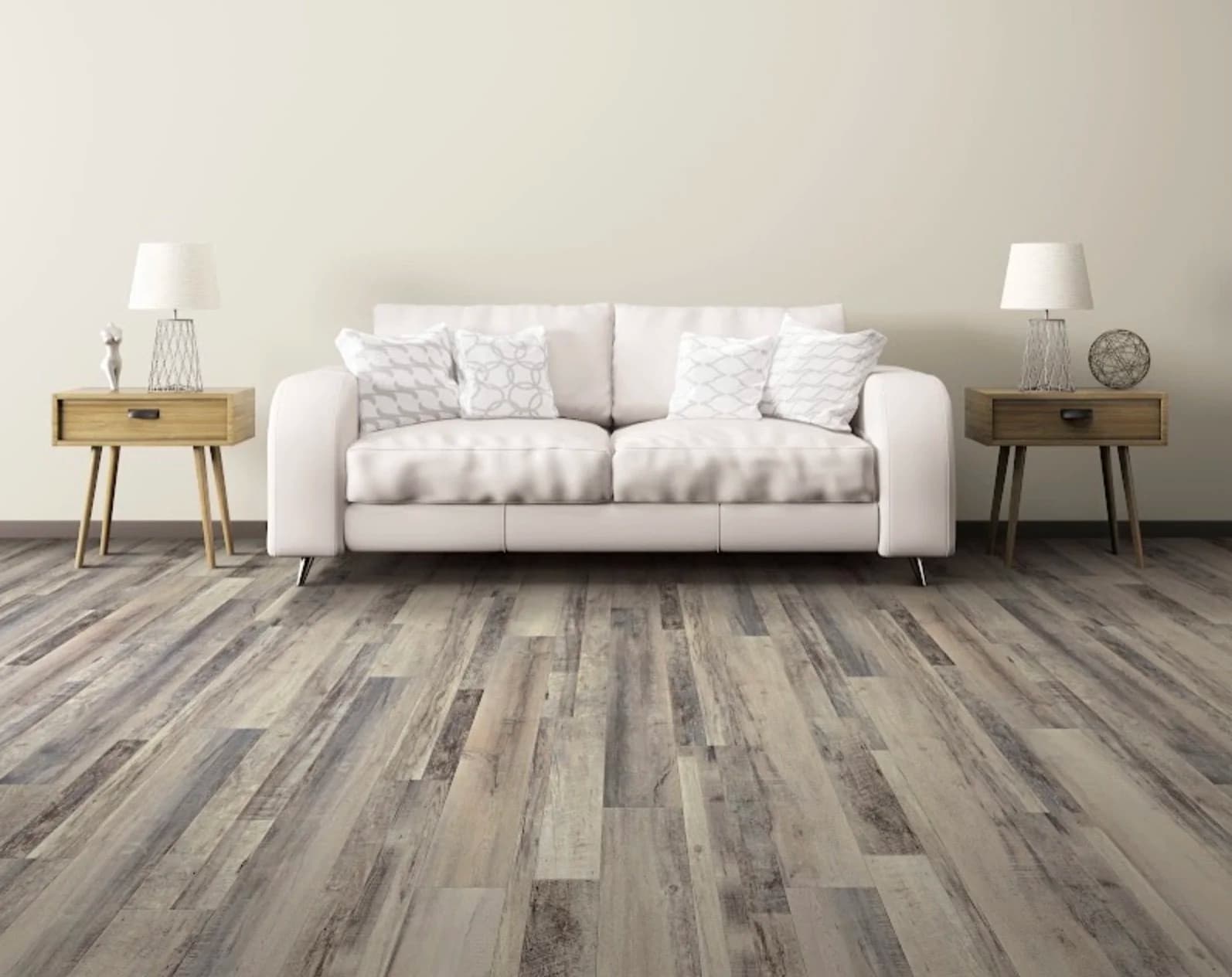
The single most important rule for cleaning a hardwood floor is to keep water off it: you clean wood with a barely-damp microfiber pad and a pH-neutral cleaner — never a sopping wet mop, and never a steam mop. Water is hardwood's enemy, and in Naples, where the floor sits over a concrete slab that already breathes moisture year-round, a wet-mopping habit is one of the fastest ways to cup, gap, or haze a beautiful floor. The good news is that the right routine takes about ten minutes a week and asks for almost nothing you do not already own. Here is how to do it properly.
The one rule: barely damp, never wet
Everything about cleaning a wood floor comes back to moisture control. Wood swells when it takes on water and shrinks when it dries — that is simply what wood does — and standing water finds the one place it can do the most harm: the seams between boards, where it wicks down into the edges and the subfloor. A wet string mop leaves a film of water that sits in those seams and soaks in. Do it weekly for a year and you get cupped edges, a cloudy haze in the finish, and gaps that open and close with the seasons.
A steam mop is worse, and it is worth saying plainly: never use one on hardwood. Steam is hot water forced under pressure straight through the finish and into the seams — it can lift a finish, whiten the wood, and it voids most flooring warranties on contact. "Barely damp" means a microfiber pad wrung out so hard it feels almost dry, so that any moisture it leaves flashes off the surface within seconds. If you can see a wet sheen trailing behind the mop, there is too much water on the floor.
“If you can see a wet sheen behind the mop, there's too much water on the floor. Damp means it flashes off in seconds.”
The weekly routine, in order
The order matters as much as the tools, because damp-cleaning over grit is how a cleaning turns into a scratching. Dry first, then damp — always. Here is the whole routine.
- 011 · Dry-dust or vacuum first — no beater bar
Get the sand and grit up before any moisture touches the floor. Use a microfiber dust mop or a vacuum with the beater bar off (that spinning brush scratches wood). This step, not the mopping, is what keeps a floor looking new.
- 022 · Use a pH-neutral wood cleaner — misted, never poured
Spray a light mist onto the pad or a small section of floor. Never pour cleaner or water onto the wood. A cleaner made for finished wood floors is neutral, so it lifts grime without dulling or etching the finish.
- 033 · Work with a barely-damp microfiber flat mop
Move with the grain in small sections. The pad should be wrung nearly dry. Flip or swap the pad when it picks up dirt so you are not pushing grime around.
- 044 · Dry immediately
The floor should be dry within seconds of the pad passing. If it is not, you are using too much liquid — mist less. In a humid Naples room, a quick pass with a dry microfiber behind you never hurts.
How often? Dust-mop the high-traffic paths and sandy entries every day or two, and do the damp clean about once a week in a normal household — more in a busy beach house, less in a guest room nobody walks through. The damp pass is for what dust-mopping leaves behind; it is not a substitute for getting the grit up first.
What never touches a wood floor
Half of protecting a floor is knowing what to keep off it. The internet is full of "natural" cleaning advice that quietly ruins hardwood. These are the ones we see damage floors in Naples homes, and why each one is a mistake.
- Vinegar and other acids — the go-to "green" tip, and a slow poison for wood. Vinegar is acidic; over time it etches and dulls the finish, leaving a floor that looks permanently hazy no matter how you clean it.
- Steam mops — heat and pressurized moisture driven through the finish into the seams. They lift finishes, whiten wood, and void most warranties. Never on hardwood.
- Oil soaps (the Murphy-style kind) — they leave a waxy residue that builds into a dull, streaky haze and, worse, contaminates the surface so a future recoat won't bond. A floor "fed" with oil soap for years often has to be fully sanded to fix it.
- All-purpose, ammonia, and bleach cleaners — formulated to cut grease on tile and counters, they strip and cloud a wood finish. What is safe on your backsplash is not safe on your floor.
- Wax on a lacquered floor — modern factory-lacquered and UV-cured floors are not meant to be waxed; wax builds up, traps dirt, and blocks the next recoat. Wax belongs only on floors specifically finished for it.
- Any generous amount of water — no matter the cleaner, the enemy is standing liquid. Mist and wipe; never flood.
Safe vs damaging, side by side
Match the cleaner to your finish
One more distinction saves a lot of floors: a lacquered floor and an oiled floor want different cleaners, and using the wrong one causes slow damage. A lacquered floor — like the VOC-free Bona lacquer RIVA ships on every plank — is sealed under a film, so you are cleaning the surface. It wants a pH-neutral wood-floor cleaner made for finished floors; Bona makes the one most of our lacquered-floor clients use. Nothing acidic, nothing waxy.
A hard-wax oil floor is finished from within the grain, and a standard cleaner used week after week can slowly strip the oil out. Oiled floors want a maintenance soap made for oiled wood — the soap made by your oil's manufacturer (a Rubio-type soap, for a Rubio Monocoat floor) — which cleans and quietly feeds the oil at the same time, plus a periodic refresher on the high-traffic paths. If you are not sure which finish you have, drop a bead of water on an out-of-the-way spot: on a well-sealed lacquer it beads and sits; on an oiled floor it soaks in more readily. Still unsure? We keep every client's finish on file — call and we will tell you exactly what is on your floor.

A Naples cleaning cadence
Naples asks a little more of a floor than most places, and the two things working against you are the same ones that scratch it: sand and salt. Fine beach and driveway sand rides in on every shoe and acts like grit under a damp pad; salt air and hard-running AC swing the humidity and keep moisture in play. A cadence built around those two facts keeps the floor easy to live with.
- 01Mat every door, inside and out
Front, garage, lanai, and pool. A coarse mat outside and a washable rug inside each door catches the sand before it ever reaches the wood — the single highest-value habit in a Naples house.
- 02Make shoes-off easy
A bench and a basket by the lanai door turns sandy beach shoes into a non-issue. Less grit in means less scratching and less to clean.
- 03Dust the sandy paths daily
The runs from the lanai, garage, and kitchen collect the most grit. A 60-second dust-mop every day or two beats a hard scrub once a week.
- 04Clean the sliding-glass tracks
The lanai door track is a reservoir of sand that spills onto your busiest threshold. Vacuum it out regularly so it stops feeding the floor.
- 05Damp-clean weekly, deep-clean seasonally
The barely-damp pH-neutral pass once a week; a thorough pH-neutral clean at the turn of the season. Snowbirds: never leave a freshly wet-cleaned floor when you close the house — dust-mop, dry, and go.
That is the whole method: get the grit up, keep the water off, use the cleaner made for your finish, and trap the sand at the door. Do that and a good wood floor stays beautiful for decades — no magic, just the right ten minutes a week. If you would like the exact cleaner for your floor, or you are not sure whether it is oiled or lacquered, stop by the Naples showroom on Trade Center Way or call (239) 597-0077. We finished a lot of these floors, we keep the specs on file, and we are happy to hand you the right bottle. ProFloors & Cabinets.