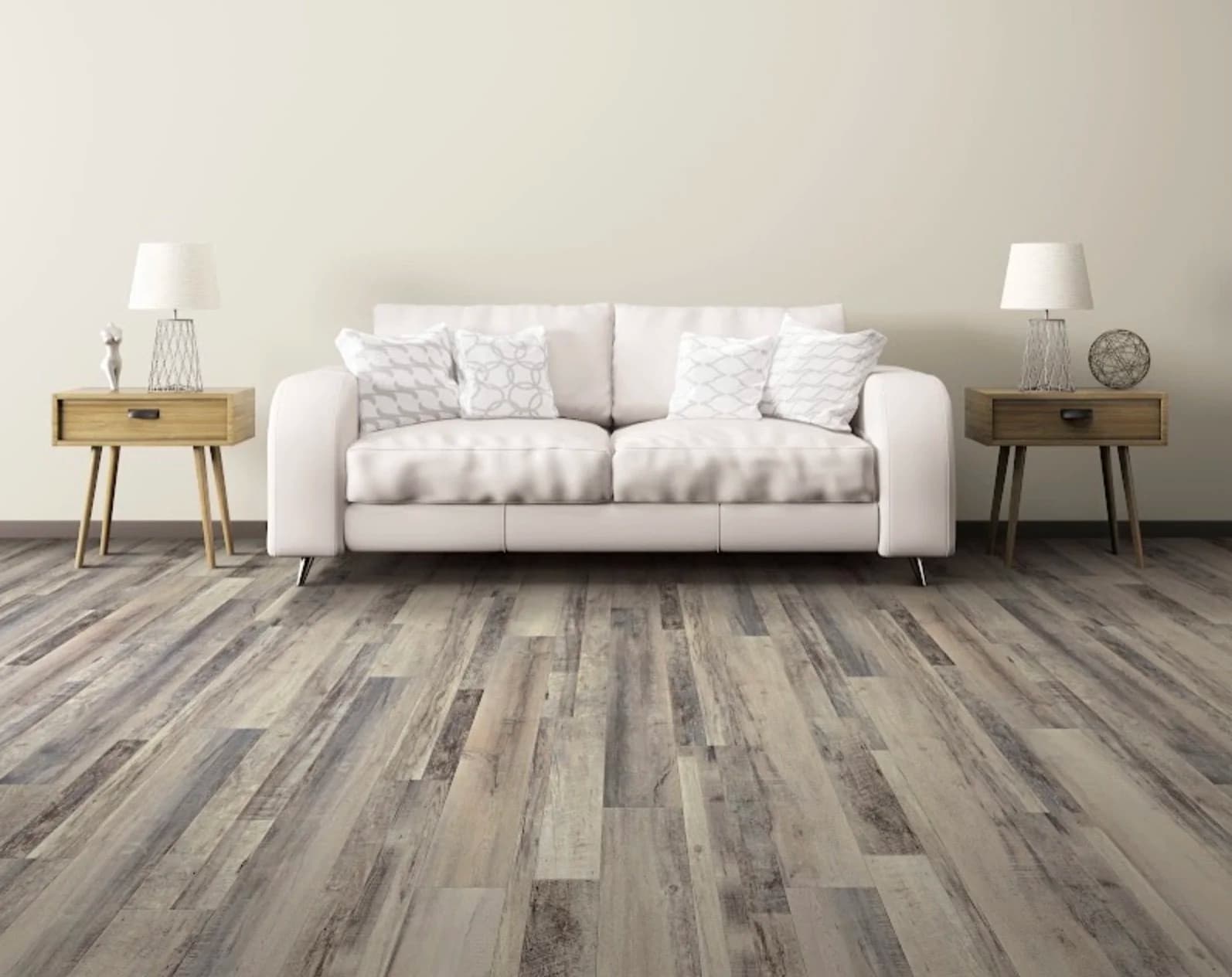
Everyone picks the tile first. It's the fun part — the marble look, the zellige's hand-glazed shimmer, the travertine warmth. But the decision that actually determines how the finished surface looks in year five isn't the tile. It's the grout color, and most people make it in thirty seconds at the end of a long appointment.
Grout is the real decision
Grout is the line your eye reads between every tile. Get it right and the pattern breathes through the room — the eye sees the room before it sees the tile. Get it wrong and you've installed a grid. A tile-set done right is almost invisible; if you walk in and see tile, it was laid wrong. The grout color is half of what makes that happen.
“A tile-set done right is almost invisible — the eye reads the room before the pattern.”
The white-grout trap
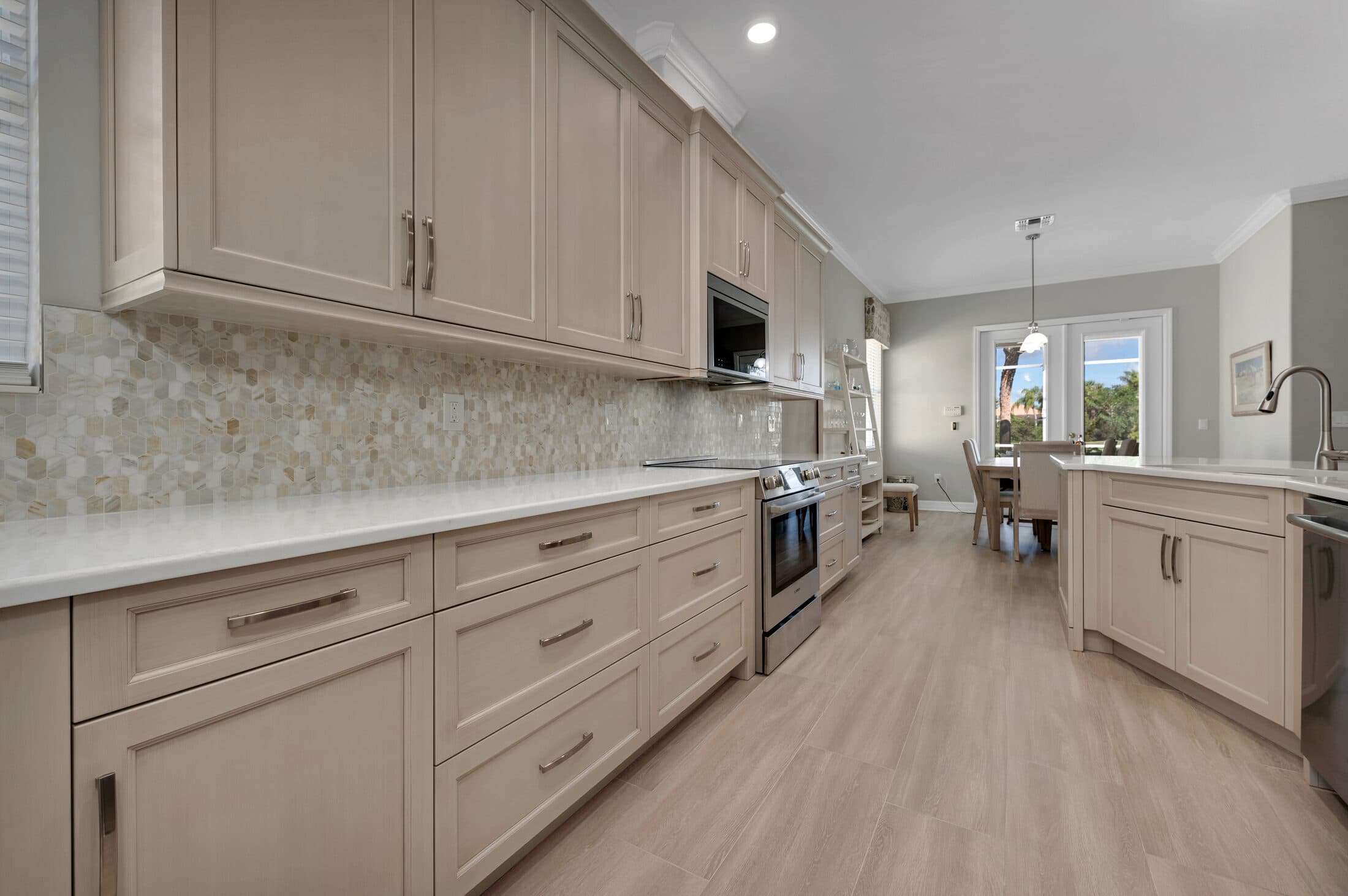
Bright white grout looks crisp in the showroom and in the first month of a magazine shoot. Then it lives in a real Naples kitchen. White grout in a kitchen becomes grey-brown grout inside five years — foot traffic, cooking oils, and salt air all settle into it. We steer clients toward a warm-taupe or a "concrete" grout that ages gracefully, because it's already the color that white grout is trying to become. The floor looks intentional at year five instead of tired.
Porcelain or real marble
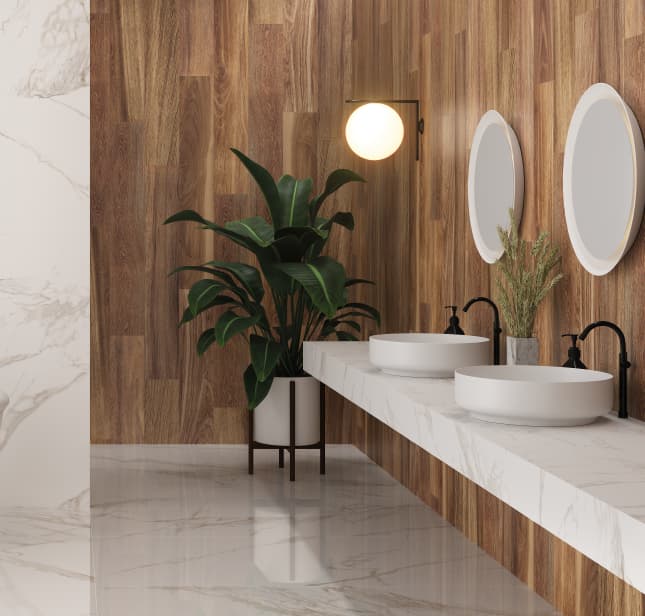
Before grout, there's the tile body itself — and the marble-look question is the most common one we field. Porcelain gives you the marble look with effectively zero upkeep: it never needs sealing, it's immune to the etching that wine and lemon cause, and modern large-format porcelain is 99% convincing in print. Real marble gives you the genuine article — nothing photographs quite like it in person — but it etches visibly with daily acidic use and wants re-sealing every one to two years.
Across Naples kitchens we install roughly 60% porcelain to 40% natural stone. For a resale-focused home or a rental, large-format porcelain has usually won the calculation. For the one hero bathroom you'll stand in every morning, real marble still reads differently — and that's a fair place to spend it.
Bigger tile, fewer grout lines
One of the simplest ways to make a surface age well is to give it fewer grout lines to discolor in the first place. Large-format porcelain — and slab porcelain at the extreme, where a single piece can run 63×126 — removes the visual noise of 12×24 joints from a shower wall or a feature kitchen wall. Less grout means less to clean, less to discolor, and a surface that reads more like stone and less like a grid. We cut slab in our shop on a diamond bridge saw and book-match adjacent pieces.
Cementitious vs epoxy grout
Standard cementitious grout chalks and discolors faster within a few miles of the Gulf — that's the salt air at work. For high-traffic kitchens or owner-occupied beach houses, we'll often recommend epoxy grout up front: it costs more to install, but it holds its color for a decade and asks for far less maintenance. On natural stone or porous ceramic we also seal at install, and the grout gets sealed at 28 days once it's fully cured.
- 01Pick the grout for year five
Warm taupe or concrete over bright white. It's where white grout ends up anyway, minus the tired-looking middle years.
- 02Consider epoxy near the Gulf
More to install, far less to maintain — it holds color for a decade where cementitious grout chalks.
- 03Go large-format to lose grout lines
Bigger tile and slab porcelain mean fewer joints to discolor and a calmer, stone-like read.
Choosing under the right light
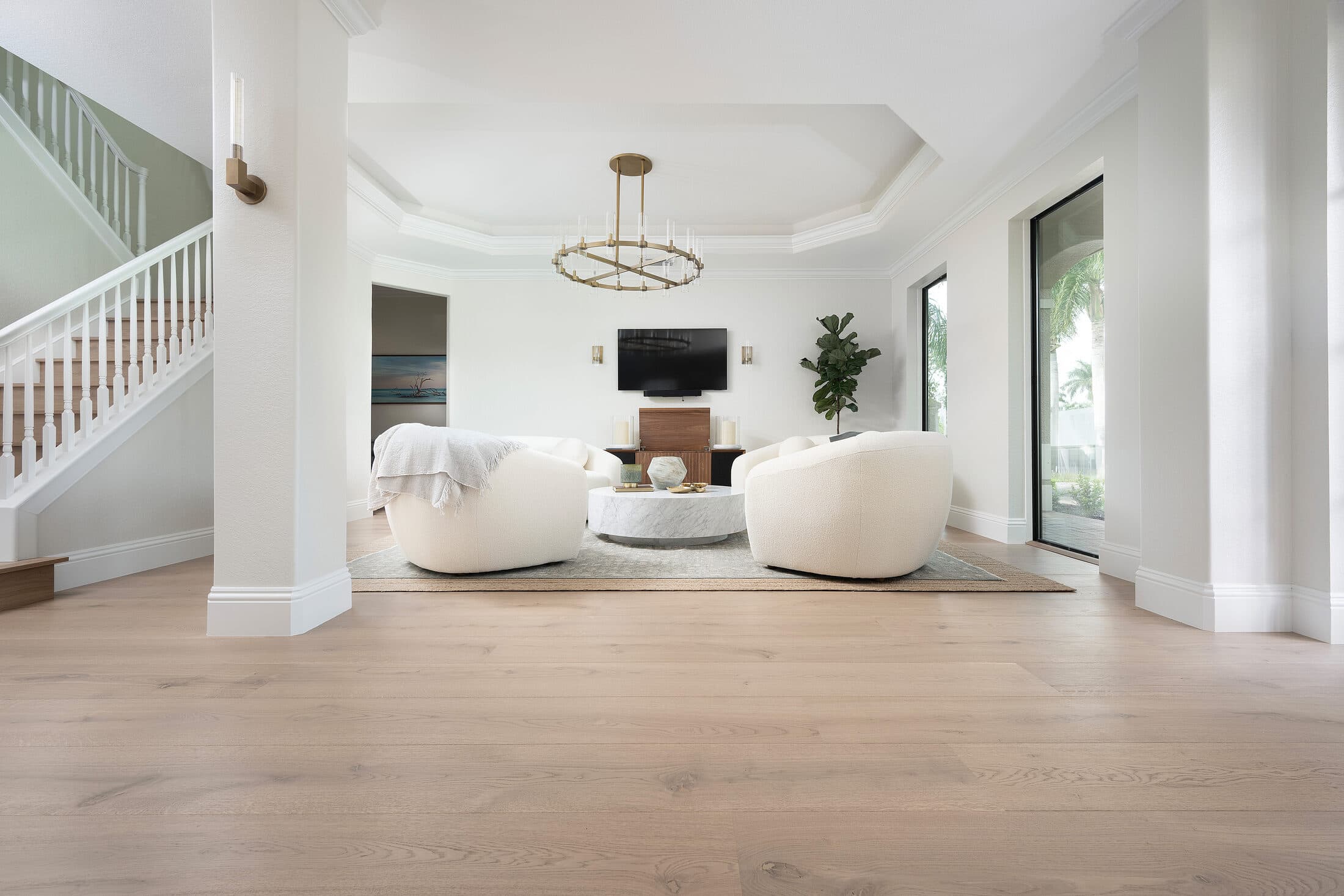
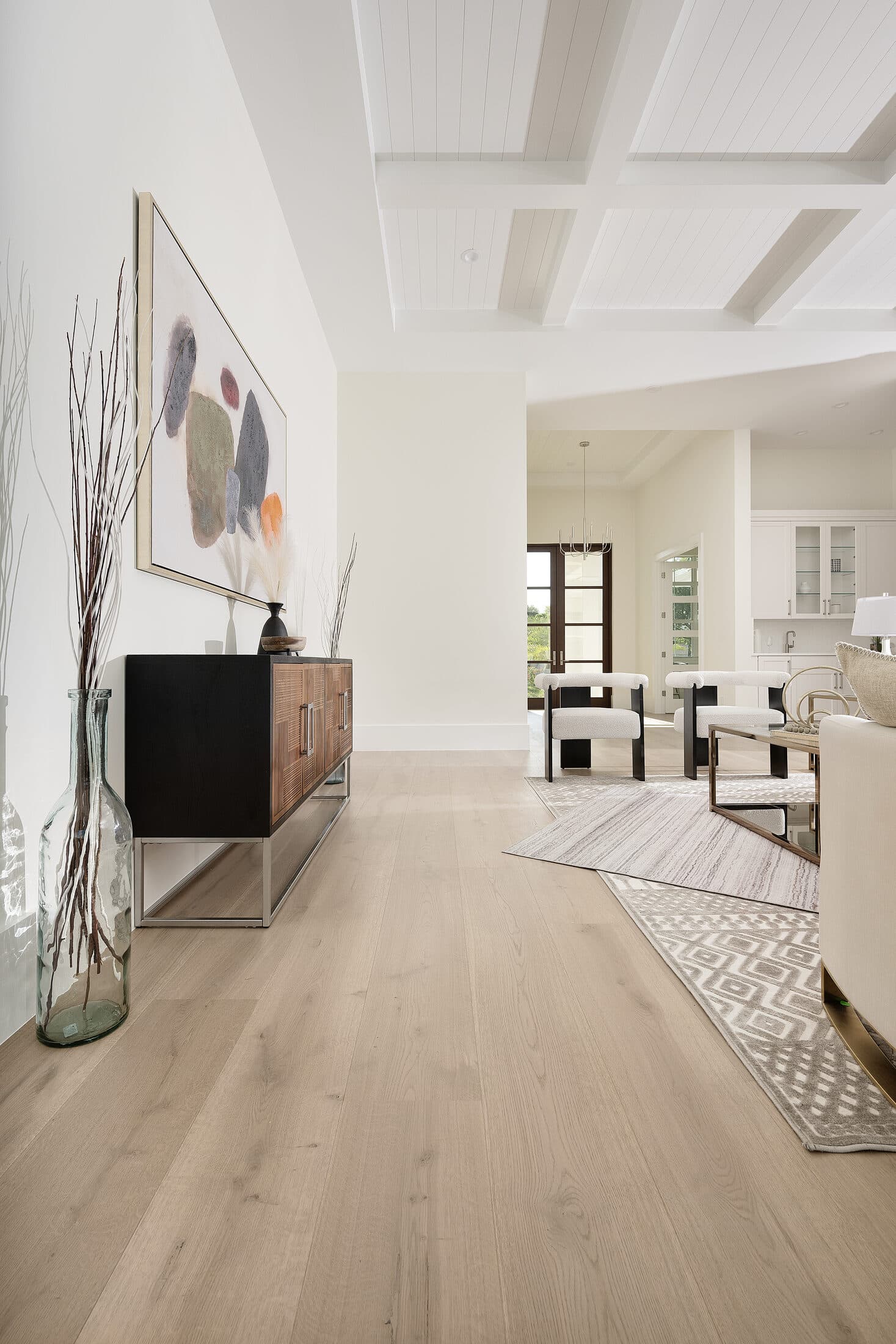
Every tile and grout decision should be made under your room's actual light, not the showroom's. We bring sample boards and a hand-held grout fan to the site so you can see the tile and three grout tones in the same Gulf light they'll live in. Tone-matching tile to an existing wood floor works beautifully — warm oak with a bone porcelain, cooler oak with a grey-taupe — but only once you've seen it where it's going. Bring us the bath or the kitchen, and we'll flood-test a sample corner and hand you three honest directions.